
Lumiverse Solutions

Hack Without Code?

Hack Without Code? The Truth About No-Code Cyber Attacks

Hack Without Code? The Truth About No-Code Cyber Attacks INTRODUCTION One of the most chilling trends in the constantly evolving world of cybersecurity is the increasing trend of no-code cyber attacks. The name “Hack Without Code?” would seem oxymoronic at first, considering that the majority of cyberattacks in the past have required an extensive understanding of coding and programming. However, with the faster pace of development of no-code tools and platforms, even those with very limited to no technical expertise can now exploit vulnerabilities and conduct sophisticated cyberattacks. This blog explores the new frontier of no-code cyber attacks, their mechanism, and how individuals and companies can protect themselves against them. We are going to walk you through the mechanism of these attacks, their implications, and provide some useful tips on how to protect your digital assets from this emerging threat. What Are No-Code Cyber Attacks Traditionally, cyber attacks such as hacking, phishing, or malware installation required a minimum level of technical proficiency. Hackers would require coding, exploiting software vulnerabilities, and detailed system and network know-how. But with no-code platforms, the books are being rewritten. No-code platforms are programs that allow people to develop websites, applications, and even workflows without writing a single line of code. As capable as these software tools are in reaching non-technical users within the realm of developing software, they have unwittingly introduced new types of cyberattacks to the fold. Hack Without Code? The answer is a resounding yes—attackers now have the ability to use these platforms to launch attacks without possessing advanced coding skills. Examples of No-Code Cyber Attacks Social Engineering using Automation: Automation of social engineering methods is supported by no-code platforms, such as phishing e-mails or impersonated websites aimed at tricking users into providing sensitive information. Phishing attacks on a large scale can be developed by attackers through these platforms. Malware Distribution: Attackers can develop malicious software or tools that spread malware without coding complicated code. By using no-code development platforms, cybercriminals can spread malware through email attachments, spoofed applications, or social media links. Abusing API Vulnerabilities: Integration with APIs is available in most no-code platforms, and APIs are usually vulnerable and susceptible to attacks. API attacks can be automated by cybercriminals using these platforms to gain unauthorized access to databases or other sensitive systems. How No-Code Cyber Attacks Are Performed To understand the significance of Hack Without Code?, one needs to see how these attacks are carried out. No-code platforms have made it easy for even novice hackers to create advanced attacks in a few steps. Let’s see how no-code cyberattacks typically unfold. 1. Using No-Code Automation for Phishing Attacks Previously, phishing used to be sending out spoofed websites or emails to trick users into sharing sensitive information. But with no-code platforms like Zapier and Integromat, attackers can automate these attacks, sending thousands of emails with personalized content that’s difficult to distinguish from actual communication. This increases the success rate and allows attackers to run phishing campaigns without needing to write complex code. 2. Creating Phantom Sites and Landing Pages Low-code website development platforms such as Wix, Webflow, or Squarespace enable anyone to create professional websites. Cyber attackers have started to use these sites for creating phantom sites or landing pages that look like reputable brands or organizations. By luring users to a site, attackers can steal the login credentials, payment details, or other secrets. 3. Exploiting Low-Code Platform Weaknesses Although no-code platforms are designed to be user-friendly, they also have their vulnerabilities. Hackers can exploit such vulnerabilities to gain unauthorized access to backend systems. Some no-code tools, especially those with APIs embedded, might lack the security features they require to defend against attacks. Why Is This Trend Gaining Traction There are several reasons why Hack Without Code is on the rise.  1. Ease of Use of No-Code Platforms The rise in popularity of no-code systems has made it possible for anyone to create advanced applications or automate processes without worrying about technicality. While this makes software development accessible to more individuals, it also makes it easier for cyber attackers to exploit the vulnerabilities of these systems for ill. 2. Automation No-code tools allow automation of processes that were previously requiring human intervention. Phishing campaigns, data scraping, or brute-force attacks can be automated by cybercriminals with minimal effort. This allows them to target more individuals with fewer resources. 3. Lack of Awareness and Training Most firms are unaware of the potential risks that no-code platforms pose to them. Employees with minimal information about the security aspect use no-code tools most of the time. Lack of adequate cybersecurity training, especially on no-code automation, leaves firms vulnerable to attacks. 4. Low Barrier to Entry Unlike technical hacking, which requires high technical skill, no-code cyberattacks have low barriers to entry. Anybody on a no-code platform can be an attacker because it has low technical requirements. This is a tremendous threat to companies and individuals. The Risks and Consequences of No-Code Cyber Attacks No-code cyber attacks pose different risks that can be disastrous to companies and individuals. Some of the most significant risks are: 1. Data Breaches With no-code tools, attackers can quickly obtain access to sensitive data through phishing or API attacks. This can result in mass-scale data breaches, customer data, financial data, and intellectual property being exposed. 2. Financial Loss Ransomware and scams are standard attacks in the no-code world of cyber attacks. Cybercriminals can lock businesses out of critical systems and demand a ransom, or they can use automated software to initiate unauthorized withdrawals from clients. 3. Reputation Damage If a company gets hacked through a no-code cyber attack, its reputation can suffer. Customers may lose trust, resulting in missed business opportunities, legal problems, and long-term financial losses. 4. Legal Consequences Lack of proper protection of user information and systems will subject the business to legal consequences, especially if a breach entails the loss of personally identifiable information (PII). Regulatory authorities like GDPR require businesses to implement strict cybersecurity to protect data. How

Hack Without Code? The Truth About No-Code Cyber Attacks Read More »

Your Company Was Hacked

Your Company Was Hacked Now What? Know It All

Your Company Was Hacked Now What? Know It All INTRODUCTION With the modern digital age, cyber attacks are not a future issue anymore today they are an everyday threat. Daily, companies worldwide are being attacked by hackers who have high-tech ways of breaking into computers. As ready as you may be for such attacks, there is always the possibility that your company got hacked. If that does happen, it is very important to know what has to be done next to contain the damage, safeguard your information, and secure your future. In this step-by-step guide, we’re going to take you through all the procedures that you need to follow when your business is breached. From identifying the breach right through to recovering your assets, we’re going to cover everything that you need to do in order to deal with a cyber attack in a professional and effective manner. Understanding the Breach: What Happened? The first step when your company was hacked is understanding what happened and what type of attack you’ve experienced. Cyberattacks can vary greatly in nature, and identifying the right one helps determine the next steps. Types of Cyberattacks: Data Breaches: This is among the most prevalent forms of cyberattacks, whereby hackers gain unauthorized access to confidential data such as customer data, financial data, and intellectual property. Such an attack is usually employed for identity theft, fraud, or selling confidential data on the dark web. Ransomware: Ransomware attacks occur to high-value companies with the hope that they will pay in order to regain valuable files or systems. Phishing Attacks: Attackers use social engineering to deceive employees into revealing confidential information such as login credentials or financial information.  Denial-of-Service (DoS) and Distributed Denial-of-Service (DDoS): These attacks try to flood your website or network with excessive traffic, making them inaccessible to users. Symptoms of a Breach: Abnormal system performance, e.g., slowness or sudden crashes. Unauthorised logon or alteration of user accounts. Unauthorised network traffic or data usage spikes. Difficulty in accessing files or programs (likely ransomware attack). New programs or files appearing where they should not. The instant you observe any indication of cyber attack, begin to investigate right away. Time is of the essence in the case of cyber attack. Knowing the type of attack can prevent further damage. Immediate Steps to Take After Your Company Was Hacked Once you’ve confirmed that your company was hacked, swift action is critical. Here are the first steps to take immediately: 1. Contain the Breach Disconnect Affected Systems: Isolate compromised computers or servers from the network to stop the hacker from accessing more data or spreading the attack. Shut Down Internet Access: If at all possible, log off the internet to prevent the hacker from reaching your systems remotely. 2. Evaluate the Damage Conduct a Methodical Investigation: Collaborate with your IT staff or an external cybersecurity professional to determine the extent of the breach. Determine what data and systems have been compromised. Determine What Was Compromised: Search for sensitive information such as customer data, employee data, or sensitive business information. 3. Inform Key Stakeholders Internal Teams: Inform your internal cybersecurity, IT, and crisis management teams about the breach. Customers: If customer data were exposed, inform those affected at the same time and give them instructions on how to look after themselves. Regulatory Authorities: In some circumstances, you might be obligated to inform local or international regulatory authorities, such as GDPR regulators or other privacy regulators. Being Familiar with Legal and Compliance Obligations Hackers are also punishable by law, and your business can be obligated to report the hack to authorities based on the severity of the attack. In certain countries, such as the European Union with GDPR (General Data Protection Regulation), you have to report the affected authorities within 72 hours of when the breach was found. Legal Compliance Steps After a Hack Notify Data Protection Authorities: If the breach concerns personal data, your organization may be required to notify data protection authorities under data protection regulations such as GDPR or CCPA (California Consumer Privacy Act). Document the Incident: Document everything that has happened, i.e., when you first learned of the breach, what actions you took, and any announcements you issued to stakeholders. Consult Legal Counsel: Hire a cybersecurity lawyer to guide you through the legal ramifications of the breach and ensure compliance with reporting and mitigation. How to Stop Additional Damage After Your Business Got Hacked Now that you have contained the breach, now is the time to shift gears to preventing additional damage. This is how you reclaim control over your systems: 1. Secure Your Network Change Passwords: Change all passwords, particularly those for important accounts. Turn on multi-factor authentication (MFA) where applicable. Patch Vulnerabilities: Collaborate with your IT department to find and patch any vulnerabilities the hacker took advantage of. Update Software: Update all your software, operating systems, and apps to reduce vulnerabilities. 2. Bring in a Cybersecurity Expert Hire an Incident Response Team: If there has been a serious breach, it is worth hiring a professional cyber security firm or incident response team to assist with investigating, fixing and recovering from the hack. Forensic Analysis: A forensic analysis will identify what happened during the hack and can assist you in being made aware of vulnerabilities within your security systems. Communicating with Customers and Clients A crucial part of recovering from an attack is restoring trust with your customers. Your company was hacked, and your clients need reassurance that their data is safe and that you’re taking steps to prevent future incidents. Best Practices for Customer Communication: Be Transparent: Notify your customers of the breach as soon as possible. Provide clear details on what was compromised and the steps you’re taking to resolve the issue. Offer Support: Provide resources such as credit monitoring services for customers whose data was impacted. Reassure Them: Highlight the measures you’re implementing to strengthen cybersecurity and protect against future threats. Maintaining a Strong Future Cybersecurity Plan Having contained the breach, it is now

Your Company Was Hacked Now What? Know It All Read More »

How Hacktivism Is Changing the New Cyber Attack Landscape

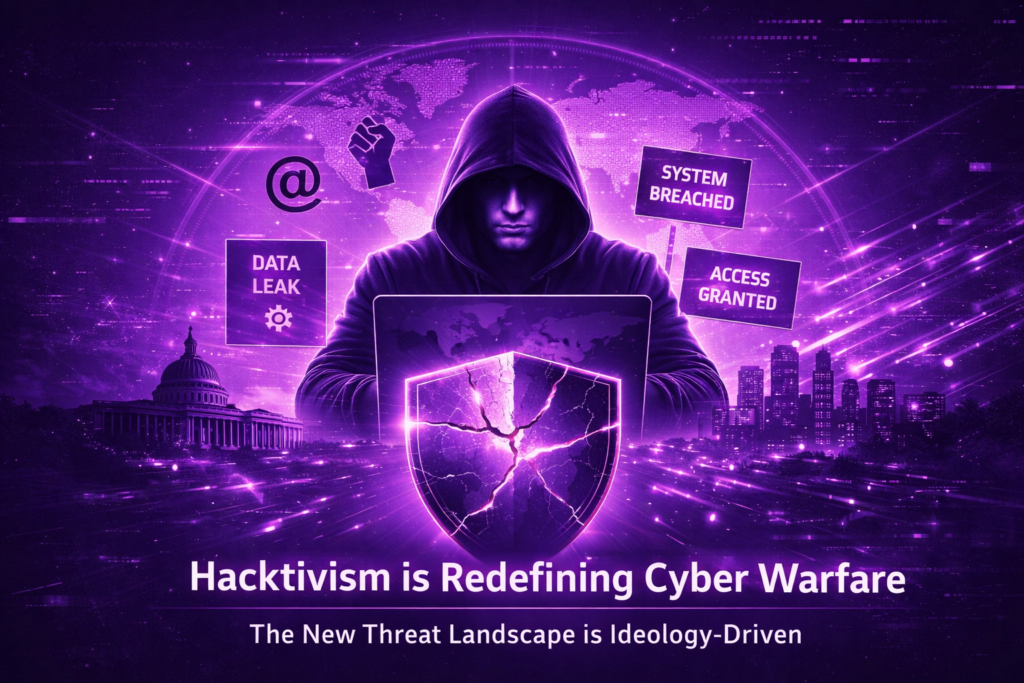
How Hacktivism Is Changing the New Cyber Attack Landscape The cyber threat landscape in 2026 is undergoing a fundamental transformation. Cyberattacks are no longer driven only by financial motives. A growing wave of hacktivism is reshaping how organizations are targeted, attacked, and exposed. Hacktivists are using cyberattacks as a tool for activism to promote ideologies, challenge governments, and hold organizations accountable. This shift has made cyber threats more unpredictable, more visible, and often more damaging to reputation than traditional attacks. Hacktivism is turning cybersecurity from a technical risk into a business, political, and reputational challenge. What is Hacktivism? Hacktivism is the combination of hacking and activism. It refers to cyber activities carried out to support political, social, or ideological causes. Expose sensitive or hidden information Disrupt digital services Influence public perception Challenge governments or corporations Unlike cybercriminals, hacktivists are not always motivated by money. Their primary goal is impact and visibility. Common Hacktivist Attack Techniques DDoS Attacks Hacktivists overwhelm systems with traffic to disrupt services and make platforms unavailable. Website Defacement Attackers alter websites to display political or ideological messages, directly targeting brand image. Data Leaks Confidential data is exposed publicly to embarrass organizations or reveal alleged wrongdoing. Social Engineering Manipulating employees to gain unauthorized access remains a powerful and commonly used method. Why Hacktivism is Increasing in 2026 Rising geopolitical tensions and digital warfare Global, decentralized hacker communities Increased demand for corporate transparency Easy access to attack tools and platforms Hacktivism is no longer isolated it is coordinated, global, and highly strategic. Impact on Businesses Operational disruption and downtime Severe reputational damage Loss of customer trust Regulatory and legal consequences Even a single hacktivist attack can significantly impact brand perception and business continuity. How Businesses Should Respond Implement real-time monitoring and detection Strengthen incident response readiness Conduct continuous vulnerability assessments Monitor brand exposure and data leaks Secure third-party and vendor access Organizations must move beyond traditional security and prepare for ideologically driven threats. Conclusion Hacktivism is redefining cybersecurity in 2026. It is no longer just about protecting systems it is about protecting reputation, trust, and business continuity. Stay Ahead of Modern Cyber Threats Connect with Lumiverse Solutions to strengthen your cybersecurity posture against emerging hacktivist threats. Book a Free Consultation FAQ: Hacktivism in 2026 What is hacktivism? Hacktivism is the use of hacking techniques to promote political, social, or ideological causes. Why is hacktivism growing? Due to global conflicts, social movements, and increased digital connectivity, hacktivism is rising rapidly. How does hacktivism affect businesses? It can lead to downtime, data exposure, reputational damage, and financial loss. Recent Posts March 24, 2026 What is a Cloud Security Assessment and Why Does Your Business Need One? March 17, 2026 How Penetration Testing Can Improve Your Business’s Cybersecurity Culture March 10, 2026 How Network Security Assessments Saved Businesses from Cyber Attacks March 3, 2026 How Geopolitical Conflicts Increase Cyber Risk for Indian Businesses February 24, 2026 AI Innovation vs Cyber Risk: What Businesses Must Learn from the 2026 AI Summit Categories Cyber Security Security Operations Center Cloud Security Case Study Technology Trends Don’t Let Cyber Risks Disrupt Your Business Growth Certified Cybersecurity & Compliance Experts: 12+ years of industry experience delivering VAPT, ISO 27001, SOC 2, and regulatory compliance aligned with global standards. Proven Real-World Cyber Expertise: 850+ cybercrime cases investigated and 1500+ cybersecurity audits conducted across enterprises and regulated industries. Strengthening People, Processes & Technology: 4500+ cybersecurity awareness sessions delivered to reduce human-layer risks and improve organizational cybersecurity. End-to-End Security Partner: From advanced penetration testing to global compliance frameworks, Lumiverse Solutions ensuring businesses stay secure, compliant, and confidently future-ready. Secure. Comply. Scale with Confidence. Book Your free Consultation → India: +91 77986 60940 / +91 7397 882 579 UAE: +971 58 585 6233

How Hacktivism Is Changing the New Cyber Attack Landscape Read More »

When Cybersecurity Meets Privacy

When Cybersecurity Meets Privacy Navigating the New Fine Line

When Cybersecurity Meets Privacy Navigating the New Fine Line INTRODUCTION Today, in an era of computers and the internet, when cybersecurity and privacy cross paths, it has never been more important to balance data security and the preservation of individual rights. While the internet brings us together in ways previously unimaginable just a short time ago, data privacy and cybersecurity are now two pillars essential to the online world. In an era where nearly everything we do is recorded electronically, how do we protect our information and keep it secure, and how do businesses protect this information from unwelcome cyber attacks? The gap between privacy and cybersecurity is less clear today, but they are equally important. This blog will explore the thin line between these two elements, how they interact, and how individuals and businesses can protect their data in the proper manner. As threats evolve with each passing day, it is important to understand how cybersecurity collides with privacy in terms of approaching the digital sphere safely. Chapter 1: The History of Cybersecurity and Privacy The Emergence of Cybersecurity Cybersecurity, actually, is the process of ensuring that networks, systems, and data are excluded from attacks or intrusion. While reliance on the internet keeps on growing, states and companies have invested enormous resources into cybersecurity in order to ensure prevention from malware, ransomware, data intrusion, and other harmful attempts. Cybersecurity goes beyond defense—there is so much more involved in ensuring integrity, availability, and confidentiality over the internet. As threats evolve, so do models of cybersecurity. Where privacy converges with cybersecurity, this is a question of balancing between the protection of data and protecting individual rights in managing their data. The Role of Privacy in the Age of the Internet Privacy, on the other hand, is actually all about the way in which personal data is collected, stored, and used. Social media, big data, and the proliferation of networked devices have made it more difficult to preserve privacy. Governments and institutions are collecting more data about individuals than ever before. But privacy is not simply a matter of keeping people’s data out of the hands of thieves; it’s about people being able to control their own data, and their data being used responsibly and with their consent. With increasing worries about surveillance, hacking, and misuse of data, understanding when cybersecurity meets privacy can be the game-changer in protecting information. It is a thin line where technology, policy, and ethics must come together. Chapter 2: The Intersection of Cybersecurity and Privacy The Blurred Line Between Cybersecurity and Privacy At face value, cybersecurity and privacy seem like two distinct disciplines: one is to protect systems and networks, and the other is to protect individual data. Reality is more complex. The intersection of cybersecurity and privacy is where data protection is a shared endeavor—protecting not only digital infrastructure but also confidentiality and trust of individuals. Cybersecurity offers a promise that criminal players cannot enter or manipulate systems and information. Privacy offers a promise that people’s personal information are handled ethically and with dignity. When privacy and cybersecurity combine, there is a requirement for a holistic approach to not only protect against cyber attacks but also to ensure that data usage complies with legal and ethical standards. Key Regulations Shaping the Intersection There are a few laws around the world that demonstrate the crossing of paths between cybersecurity and privacy: GDPR (General Data Protection Regulation): GDPR, the European Union’s data privacy law, is one of the most stringent data privacy legislations. It mandates organizations to protect users’ personal data through cybersecurity as well as privacy. In combining privacy and cybersecurity, GDPR makes companies adopt positive measures in securing user data against unauthorized use. CCPA (California Consumer Privacy Act): CCPA is yet another crucial regulation that discusses how organizations are required to handle personal information. CCPA focuses on the importance of privacy, security, and privacy protection. Cybersecurity processes must be combined with privacy policies in order to meet these requirements. HIPAA (Health Insurance Portability and Accountability Act): In the healthcare sector, HIPAA requires strict controls on both privacy as well as cybersecurity in order to protect sensitive health data. These regulations clearly identify the extremely intimate connection between cybersecurity and privacy, emphasizing how these two practices need to evolve along with each other. Chapter 3: Risks to Privacy and Cybersecurity Threats Cybersecurity Threats Having an Impact on Privacy The context for online threats is evolving, as too is the impact of these threats on privacy. When privacy and cybersecurity are combined, organizations must consider both the integrity of their infrastructure and the protection of sensitive personal data. Data Breaches: The most significant threat to privacy from cybersecurity is data breaches. When intimate personal information like credit card numbers, passwords, or medical information is leaked, security and privacy are compromised. Malware and Ransomware: Malicious software that freezes or steals data can be devastating. Ransomware attacks, in particular, extort data and violate users’ privacy. Such attacks are typically a blow to privacy and reveal the vulnerabilities of an organization’s cybersecurity setup. Phishing Attacks: Phishing attacks trick users into sharing personal information by making them think a legitimate source has sent a message. Cyberattackers primarily use phishing as a stepping stone to gaining access to sensitive information, which both violates cybersecurity and privacy measures. Spyware: Software secretly monitoring individuals’ activity on their computers and stealing personal information violates both security and privacy. The Impact of Data Misuse on Privacy While cybersecurity focuses on not granting unauthorized access, privacy concerns come into play where information is misused or mismanaged after it is collected. Misuse of personal information can involve selling it to third parties without authorization or using it for targeted advertising in ways infringing on people’s privacy expectations. Where privacy and cybersecurity meet, it is no longer a question of protecting information from the outside world but ensuring that organizations handle data in a responsible and ethical manner. A good cybersecurity system has to protect privacy as well

When Cybersecurity Meets Privacy Navigating the New Fine Line Read More »

Ethical Hackers New Essential

Ethical Hackers New Essential to Cybersecurity and Protection

Ethical Hackers New Essential to Cybersecurity and Protection INTRODUCTION With our modern digital era, cybersecurity has never been more vital than now. As cyberattacks continue to evolve and become ever more advanced, companies and individuals alike have to implement more powerful security controls to guard confidential information and digital properties. Among the numerous countermeasures used to guard against cyberattacks, ethical hackers have now become an indispensable component in having effective cybersecurity infrastructures. The increased use of technology, from cloud computing to Internet of Things (IoT) devices, has introduced new cybersecurity challenges. As many put emphasis on classic defense tools, ethical hackers now rank as a new standard in the field of cybersecurity. They now do more than vulnerability testing and auditing alone but instead fight cybercrime proactively and help keep systems free from the ever-changing threat environment. This blog will discuss why ethical hackers are now a new necessity to cybersecurity, what they offer to organizations, the skills and equipment needed to do their job, and how they help with proactive defense against cybercrime. What are Ethical Hackers? Ethical hackers, or white-hat hackers, are individuals who employ their skills in hacking to look for vulnerabilities and weaknesses in systems and networks by the authority of the system owner. In contrast to black-hat hackers (hacking criminals) who utilize vulnerabilities for harmful intentions, ethical hackers engage in making security stronger by discovering and remedying possible threats before they can be used against a system. The term ethical hacking has come to be used as companies, states, and citizens become more dependent on digital infrastructure. The hackers are better organized and more complex in their attacks, hence the need for organizations to have individuals who can outwit cybercriminals. This is where ethical hackers fit in. Why Ethical Hackers Are the New Essential to Cybersecurity 1. Increasing Cybersecurity Threats Cybercrime has emerged as one of the largest dangers faced by individuals as well as companies. With increased sensitive information kept online and operations shifted to digital media, organizations become the first choice of cyber attackers. Ranging from ransomware attacks to phishing, cyber attackers are continuously refining their tactics to evade conventional security mechanisms. The speed at which cybercrime techniques evolve leaves traditional defense systems—firewalls, antivirus, and encryption—short to effectively halt sophisticated attacks. Ethical hackers are now more crucial than ever in such an environment. They employ their hacking expertise to keep ahead of the malicious hackers, constantly monitoring and enhancing systems to safeguard them against new and emerging threats. 2. Proactive Defense Instead of Reactive Historically, cybersecurity was reactive, and businesses would react to attacks once they had been launched. This has been found to be a costly and inefficient method. Hackers have become more strategic and now tend to use long-term attacks that go unnoticed until a lot of damage has been caused. Ethical hackers take a proactive stance, finding vulnerabilities and weaknesses in systems before they can be exploited by hackers. They conduct penetration testing, vulnerability assessments, and security audits to find where systems can be penetrated. By fixing vulnerabilities early, ethical hackers ensure that companies are secure from attacks before they happen, drastically minimizing the likelihood of a successful breach. 3. Enhancing Security in Real-Time With businesses and organizations increasingly operating 24/7, security needs to be continuously monitored and maintained. Ethical hackers play a critical role in real-time security monitoring, responding to potential threats as they emerge. In contrast to conventional cybersecurity tools that offer passive defense, ethical hackers are very proactive in discovering zero-day vulnerabilities (hitherto unknown weaknesses). Their capability to quickly discover and react to security threats provides organizations with a major edge in protecting themselves from attacks. 4. Industry Standards and Regulations Compliance With cyber threats becoming increasingly sophisticated, regulatory agencies have risen to the occasion to impose stricter cybersecurity regulations.  Ethical hackers help organizations achieve regulatory compliance by performing routine security reviews and assisting in the implementation of best practices in securing sensitive information. Their capability to find gaps in compliance and fix them ensures that organizations are compliant, and they do not incur massive fines and damage to their reputation. 5. Enhancing Incident Response and Recovery In the worst case scenario of a cyberattack, ethical hackers are crucial in facilitating recovery for organizations. They conduct an analysis of the attack, determine the severity of the damage, and advise organizations on remediation of the problem and restoring operations. Ethical hackers also assist in creating improved incident response strategies to eliminate future risks and minimize downtime when recovering. Skills and Tools Required by Ethical Hackers In order to effectively carry out their responsibilities, ethical hackers require a blend of technical skills and critical thinking capabilities. Some of the most important skills and tools that make ethical hackers the new must-have in cybersecurity are detailed below: Key Skills: Knowledge of Programming Languages: Ethical hackers need to be skilled in programming languages including Python, C/C++, Java, and JavaScript. These are used to script, automate procedures, and to know how programs and systems operate. Networking Acumen: Ethical hackers need to know networking protocols such as TCP/IP, DNS, HTTP, and SSL/TLS. This acumen enables them to probe network defenses and look for possible vulnerabilities. Operating System Acumen: An intimate knowledge of both Windows and Linux operating systems is fundamental for ethical hackers since most vulnerabilities lie in the OS layer. Cryptography and Encryption: Ethical hackers need to be well-versed in encryption algorithms and cryptographic protocols to assess the security of data in transit and at rest. Essential Tools: Nmap: A powerful tool for network mapping and vulnerability scanning. Wireshark: A tool for monitoring network traffic and identifying potential issues. Metasploit: A framework for testing vulnerabilities in systems by simulating real-world attacks. Burp Suite: A web application security testing tool, frequently utilized for penetration testing. Kali Linux: A Linux distribution that is filled with tools designed to be used for security auditing and penetration testing. How Ethical Hackers Help with Cybersecurity Ethical hackers help with cybersecurity in many ways: 1. Penetration Testing

Ethical Hackers New Essential to Cybersecurity and Protection Read More »

Why New Cybersecurity Training

Why New Cybersecurity Training Essential for Businesses in 2025

Why New Cybersecurity Training Essential for Businesses in 2025 INTRODUCTION Looking ahead to 2025, one of the top priorities for organizations across the world is cybersecurity. Cybercrime evolves and adapts with new attack targets emerging regularly. Cyberattackers, hackers, and malicious actors are using newer advanced methods of exploiting vulnerabilities in cyberspace. To counter it, organizations will have to implement a strong cybersecurity strategy and invest in top-notch cybersecurity training so that they are able to keep up with those evolving threats. Cybersecurity training for employees is no longer optional—it’s essential. With the increasing frequency and complexity of cyberattacks, it’s imperative that businesses equip their teams with the right knowledge and tools to protect sensitive data, ensure system integrity, and maintain a secure digital environment. This blog will explore why new cybersecurity training is essential for organizations in 2025, and how it can help safeguard your digital infrastructure against emerging threats. Understanding the Evolving Cyber Threat Landscape The cybersecurity landscape is rapidly changing. Over the past decade, cyberattacks have become more complex and harder to detect. Cybercriminals are employing advanced tactics such as AI-driven malware, phishing attacks, ransomware, and social engineering to infiltrate organizational systems. The frequency of these attacks is also on the rise, with data breaches, cyber fraud, and system intrusions happening more often than ever before. One of the biggest challenges for companies in 2025 is adapting to these evolving threats. Hackers’ techniques have evolved, and attackers are using automated scripts, AI-based algorithms, and other advanced tools to bypass traditional security controls. Traditional security controls are therefore not enough to prevent data theft, monetary loss, and loss of reputation. In order to succeed in the battle against cybercrime, businesses must update their cybersecurity tools, programs, and measures periodically. This is where new cybersecurity training is necessary. It updates employees on emerging threats and teaches them how to defend themselves against emerging threats. Why New Cybersecurity Training is Necessary in 2025 1. The Rise of New and Sophisticated Cyber Threats Some of the next-generation cybersecurity threats that will most likely grow in 2025 are: AI-Based Cyberattacks: Cyberattackers are utilizing machine learning and artificial intelligence to develop malware that can self-edit, learn based on environments, and evade typical security controls. Ransomware-as-a-Service: Cyberattackers are selling ransomware toolkits, which makes even non-cyber attackers able to carry out ransomware attacks. Sophisticated Phishing Attacks: Phishing emails have become more sophisticated as they appear to be from legitimate companies and trick the users into clicking on malicious links or malware downloads. With each innovation in such attacks, there is a need for further training in cybersecurity to make employees competent. Employees need to be taught to detect these sophistications and respond to them properly. 2. Human Error is Still the Weakest Link Even the most robust cybersecurity software is no match for human error. Employees are the first line of defense against cyber attacks, yet they can be the weakest link. One mistaken click on a phishing email or opening a file that is contaminated can lead to a massive breach. New cybersecurity training is essential to help mitigate human error, which remains the most prevalent cause of security breaches. Training must focus on: Phishing and social engineering attempt recognition Reporting suspicious activity or email in a timely manner Password hygiene necessity Use of multi-factor authentication (MFA) By having regular and up-to-date training, organizations can successfully restrict the likelihood of human mistake causing a security breach. 3. Adherence to Growing Regulations It is more imperative than ever before in 2025 to adhere to data protection and privacy legislations. Given the occurrence of data breaches more regularly, governments worldwide have made tighter policies to ensure that organizations handle sensitive data sensibly. The most influential among these policies are: General Data Protection Regulation (GDPR): Adopted by the European Union, GDPR forces corporations to protect individuals’ personal data and privacy. Health Insurance Portability and Accountability Act (HIPAA): Applies to healthcare industry businesses to make certain that patient information is protected in a secure way. New security training can help organizations stay compliant by making sure employees are trained on such laws and exercising data protection, privacy, and security best practices.  4. Safeguarding the Remote Workforce COVID-19 pandemic has irrevocably changed the nature of work. Remote and hybrid work models will continue in 2025, which is more of a security risk. Corporate networks stretched through employees working remotely or public internet networks are at a higher risk of cyberattacks such as man-in-the-middle attacks, malware infection, and data theft. There must be fresh cybersecurity training encompassing directions on how to secure remote work practices such as: Use of VPNs to protect internet traffic Protection of home networks using firewalls and password protection Detection of phishing attacks on remote staff Implementation of device security controls like mobile device management (MDM) By providing cybersecurity training that is specific to remote working, companies are in a position to protect their data and networks while allowing for flexibility in working environments. 5. Creating a Cybersecurity Culture Throughout the Organization Cybersecurity is not just an IT issue; it’s everyone’s issue throughout the organization. Organizations in 2025 must have a cybersecurity culture where every employee, regardless of job function, understands precisely how their effort keeps the company’s systems and data safe. New cybersecurity training can be an important ingredient in creating such a culture by: Providing ongoing education to all employees, not just the IT department Developing effective cybersecurity procedures and policies Encouraging proactive actions, such as reporting suspicious activity and adhering to security protocols Leadership and demonstrating the importance of cybersecurity A strong cybersecurity culture enables every employee to take ownership of their actions, reducing the likelihood of an attack and the overall security posture of the organization. Key Components of Successful Cybersecurity Training in 2025 In 2025, to be effective, cybersecurity training needs to be holistic, up-to-date, and experiential. The following are some of the key characteristics that should be integrated in an effective training program: 1. Phishing Simulations and Hands-On Training Make

Why New Cybersecurity Training Essential for Businesses in 2025 Read More »

Building a Strong Cybersecurity

Building a Strong Cybersecurity New Strategy to Fight Cybercrime

Building a Strong Cybersecurity New Strategy to Fight Cybercrime INTRODUCTION With the age of modern times, the world has become so dependent on the digital platform. With this dependency on the digital platform, there is always a shadow of cybercrime looming large before us. The cyber criminals keep inventing new methods to take advantage of vulnerabilities, and therefore it is necessary that individuals and organizations build a robust cybersecurity strategy so that sensitive information and assets can be protected. Cybersecurity is not an activity but a series of related activities aimed at protecting data, devices, and systems from malicious actors. To effectively combat cybercrime, we need to adopt a comprehensive cybersecurity strategy to combat on various fronts. In this blog, we delve into the critical elements of crafting a robust cybersecurity strategy that will prepare you to combat contemporary cybercriminals. Understanding the Cybercrime Landscape Before moving into strategies, let’s learn the cybercrime threats faced by businesses and individuals. Cybercrime is any offense that utilizes a computer, networked device, or digital data. The size and influence of cybercrime have increased exponentially, resulting in money loss, reputation loss, and security compromise. The following are common types of cybercrime: Ransomware Attacks: They lock up data or systems and encrypt them and ask for ransom to release them. Cyber attackers take advantage of system vulnerabilities, locking up the drives or files up totally until the payment is received. Phishing: A fraudulent technique in which attackers pretend to be genuine organizations and lure people into divulging sensitive information, e.g., login credentials, credit card numbers, etc. Data Breaches: Unauthorized access to sensitive or personal information, like customer information or company confidentialities. This can be due to network vulnerabilities or hacked employee credentials. DDoS (Distributed Denial of Service) Attacks: Cyber attackers inundate a site or network with record traffic to overwhelm systems, resulting in service disruptions. Insider Threats: Employees or contractors intentionally or unintentionally compromising organisational data, systems, or security. With this growing threat landscape, there is a need to develop a solid cybersecurity strategy in order to deal with the threat of cybercrime and protect your organization’s assets. Major Components of Developing a Strong Cybersecurity Strategy 1. Risk Assessment and Vulnerability Management The first part of building a good cybersecurity program is to have an understanding of the threats to which your firm is vulnerable. Risk analysis involves the identification of potential vulnerabilities to your applications, systems, and network. You can only then prioritize your efforts by identifying the risks. Conduct Regular Vulnerability Tests: Conduct regular tests for your systems to identify vulnerabilities. Run automated scanners to test your network and applications for potential weaknesses. Patch Management: Conduct a strict patch management process. As soon as security patches and updates are available, apply them in a single step to seal discovered vulnerabilities. Penetration Testing: Periodic penetration testing (ethical hacking) assists in emulating actual cyberattacks on your network to attempt vulnerabilities. By regularly probing your company’s weaknesses and rectifying them, you minimize your risk to cybercrime considerably. 2. Solid Authentication and Access Control One of the most critical features of having an effective cybersecurity strategy is limiting access to your data and systems. Illegal access continues to be one of the most prevalent ways through which cybercriminals launch attacks on systems. Proper authentication and access controls are necessary in an attempt to prevent such attacks. Multi-Factor Authentication (MFA): Roll out MFA on all systems to demand access to depend upon something other than a password. MFA can generally be something you know (a password), something you possess (a token or phone), and something you are (biometric information). Least Privilege Principle: Implement the principle of least privilege, whereby employees or users are granted only as much access level that is required to do their work. Regular Review of Access Control Policies: Review and maintain user access controls regularly so that they are consistent with up-to-date roles and responsibilities. By providing access to controlled systems and sensitive data, you reduce opportunities for unauthorized access and decrease the risk of cybercrime. 3. Employee Training and Awareness The largest cybersecurity threat remains the human element. Employees are being targeted with social engineering techniques by cybercriminals, tricking them into revealing confidential information or opening virus-ridden emails. Implementing an effective cybersecurity policy involves ongoing employee training in a bid to build security risk awareness. Phishing Awareness: Run periodic phishing simulations to educate employees to recognize and reject suspicious email, links, or attachments. Educating employees to be vigilant in dealing with unsolicited communications can prevent most attacks. Security Best Practices: Educate employees on password hygiene, the need for software updates, and safe use of mobile devices. Security Policies and Procedures: Inform your employees of your organization’s cybersecurity policies and what to do if they detect a security incident. Training your employees ensures they are on guard and can recognize and block attempts at cybercrime. 4. Data Encryption and Backup Encrypted sensitive data means that even if intercepted, it cannot be accessed. Good backup system also implies that data can be restored in the event of an attack or disaster. Encrypt Data: Implement strong encryption techniques to secure data at rest (stored) and data in transit (transferred across networks). Encryption makes stolen data useless. Backup Critical Data: Regularly, automatically back up critical data and systems. Backups should be stored securely, either on physical media or cloud storage, so data can be recovered in the event of an attack. These steps are required in avoiding data theft and business continuity in the event of an attack. 5. Endpoint Security As more and more employees work remotely and from different devices, endpoint security like laptops, smartphones, and tablets is a vital part in developing an overall cybersecurity plan. Install Anti-Malware and Antivirus Software: Make sure all endpoints have the latest antivirus and anti-malware software installed to detect and steer clear of threats. Mobile Device Management (MDM): Use MDM solutions to secure and manage mobile devices workers use for commercial purposes. 6. Incident Response and Disaster Recovery

Building a Strong Cybersecurity New Strategy to Fight Cybercrime Read More »

New DPDP Act

New DPDP Act Strengthening Data Privacy Protection in India

New DPDP Act Strengthening Data Privacy Protection in India INTRODUCTION In the current era of digital life, data security and privacy are the pillars of internet participation. As there is increased reliance on data-centric technologies by governments, corporations, and individuals, safeguarding personal data is priority number one. Faced with these threats, India has made a giant leap ahead by introducing the New DPDP Act (Data Protection and Privacy Act), which will make data privacy protection stronger for the citizens. The New DPDP Act is an all-encompassing law that enforces personal data to be handled in the best possible manner and companies operating business in India to be held accountable for keeping people’s privacy secure. This blog discusses the most significant aspects of the New DPDP Act, its intent, its impact on businesses, and the implications of the New DPDP Act on data privacy in India. What is the New DPDP Act? The New DPDP Act It is a general regime of legislation that governs the collection, processing, storage, and transfer of personal data.  India’s earlier data protection legislation, the Information Technology (Reasonable Security Practices and Procedures and Sensitive Personal Data or Information) Rules, 2011, were found to be insufficient in keeping pace with the fast-evolving digital environment. The New DPDP Act is an attempt to fill such lacunae and bring India at par with global standards such as the General Data Protection Regulation (GDPR) of the European Union. The prime objective of the New DPDP Act is to ensure that personal data is processed securely, ethically, and responsibly, thus protecting individual rights and promoting confidence in digital spaces. Key Features of the New DPDP Act 1. Scope and Coverage The New DPDP Act covers all organizations. Private Companies Government Agencies Non-Profit Organizations Foreign Organizations with Indian Clients or Data The New DPDP Act has a wide applicability that is directed at different industries like healthcare, finance, e-commerce, telecom, and social media platforms. It brings organizations dealing with personal data to adopt leading-level privacy principles. 2. Management of Consent One of the cornerstones of the New DPDP Act is securing clear and informed consent from an individual prior to collecting and processing his/her personal data. Organizations must: Evidently specify the purpose for collecting data. Make withdrawal of consent by users easy. This consent model seeks to enable people to take control of their data to make it more accessible and impossible for other people to access. 3. Data Minimization and Purpose Limitation The New DPDP Act mandates that only the minimum amount of personal data necessary for a specific purpose should be gathered. Businesses cannot gather too much data which are irrelevant to the product or service being offered. This ensures that data is gathered only for a specific, legitimate purpose and not beyond that. 4. Data Security Measures New DPDP Act puts stringent obligations on companies to adopt strong data protection measures to safeguard personal data against breaches, theft, and abuse. Organizations are required to: Adopt encryption and anonymization methods. Apply access controls and authentication methods to limit unauthorized access to data. Periodically audit and monitor systems to detect and counter possible security threats. The Act stresses that data protection is not only the responsibility of the data controller but also of data processors who process personal information on behalf of others. 5. Data Subject Rights The New DPDP Act grants various significant rights to individuals in relation to their personal data: Right to Rectification: One can ask for correction in the event of inaccuracy or incompleteness of information. Right to Deletion: One has a right to have one’s information deleted in some situations, for example, where the information is no longer required. Right to Portability: One has a right to move one’s information from one provider of services to another in an accessible format. These rights allow people to have more control over their data and maintain their privacy. 6. Data Protection Impact Assessments (DPIAs) The New DPDP Act requires organizations to carry out Data Protection Impact Assessments (DPIAs) of processing operations that are likely to result in a high risk to individuals’ rights and freedoms. It implies assessing the privacy risks arising out of new technology or processing activity and applying mitigants against the same. 7. Data Breach Notification The New DPDP Act provides for mandatory data breach notification for companies.  Notify the concerned parties in a timely manner, particularly if the breach has a potential to affect their privacy. Notify the Data Protection Authority (DPA) of the breach and furnish information about the breach, including the type of breach and remedial measures taken. The duty to alert people to data breaches guarantees transparency and allows aggrieved persons to take swift action in defending themselves against subsequent damage. 8. Data Protection Authority (DPA) The New DPDP Act creates a Data Protection Authority (DPA) that is entrusted with the power of imposing provisions under the Act. The DPA will: Investigate and address complaints involving data breaches and invasions of privacy. Issue regulations and rules to enforce compliance with data protection standards. Take action against non-compliant organizations as a form of penalty. Impact of the New DPDP Act on Businesses 1. Compliance Requirements Companies that have operations in India or have Indian customers will be required to modify and realign data privacy practices and policies to meet the New DPDP Act. These include setting effective data protection measures, having consent handling, and applying data subject rights. Companies will need to employ data protection officers (DPOs) and invest funds on compliance programs in meeting regulatory requirements. 2. Fines and Penalties Non-compliance with the New DPDP Act may attract huge fines. The DPA may impose penalties for contraventions, varying from minor offenses to serious contraventions. For serious contraventions, entities may be fined up to 4% of worldwide annual turnover or Rs 10 crore (the higher of the two). 3. Data Transfers and Cross-Border Implications Companies will be required to provide the assurance that personal data leaving India is under an adequate

New DPDP Act Strengthening Data Privacy Protection in India Read More »

New Cyber Law in India 2026: Are You Compliant or at Risk?

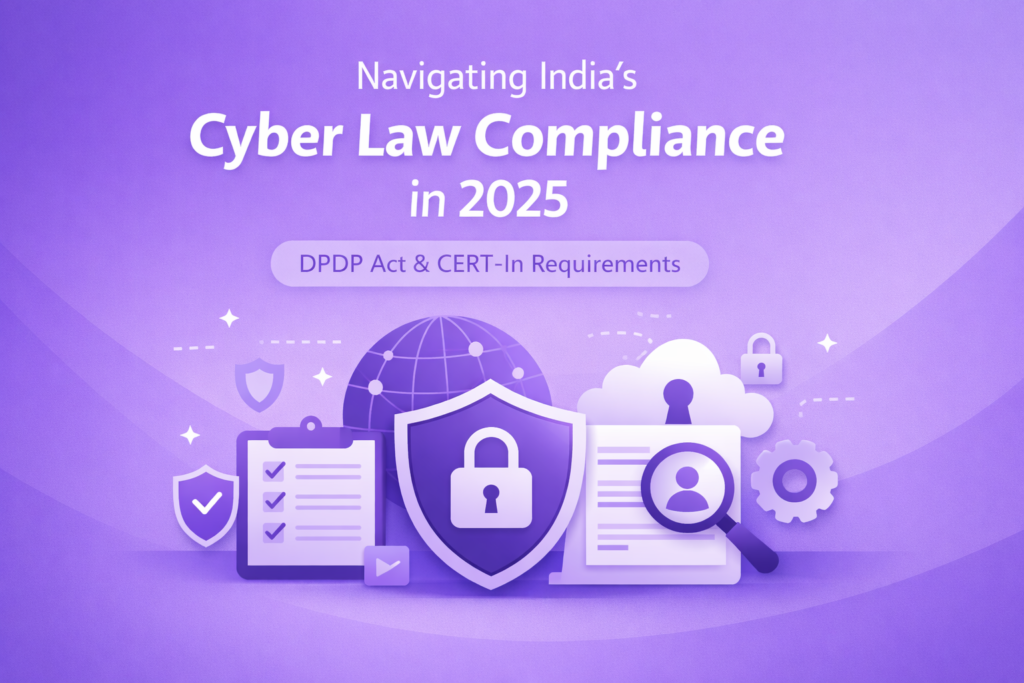
New Cyber Law in India 2026: Are You Compliant or at Risk? India’s cybersecurity and data protection regulations have entered a new era with the enforcement of the Digital Personal Data Protection (DPDP) Act 2023 and strengthened CERT-In reporting mandates. Organizations handling customer, financial, healthcare, or employee data must now follow strict compliance protocols under Indian cyber law. Non-compliance can result in financial penalties reaching crores of rupees, regulatory investigations, operational disruption, and significant reputational damage. Legal Framework Governing Cyber Compliance in India Information Technology Act, 2000 – Governs cybercrime, electronic records, and digital signatures. Digital Personal Data Protection Act, 2023 – Regulates collection, storage, processing, and transfer of personal data. CERT-In Guidelines – Mandate reporting of cybersecurity incidents within defined timelines. Sectoral Regulations – RBI, SEBI, IRDAI cybersecurity frameworks for regulated industries. Key Obligations Under the DPDP Act Obtaining explicit user consent before data collection Purpose limitation and data minimization Right of individuals to access, correct, and erase data Mandatory breach reporting obligations Appointment of Data Protection Officer (for significant data fiduciaries) Implementation of reasonable security safeguards Maintenance of records and documentation for accountability Penalties for Non-Compliance The DPDP Act provides significant financial penalties depending on the nature and severity of violations. Fines may extend to hundreds of crores for major breaches, repeated non-compliance, or failure to implement adequate security safeguards. Regulators may also impose corrective directives, restrict data processing activities, or conduct formal investigations into organizational practices. Industries Most Impacted Fintech & Banking E-commerce Platforms Healthcare & HealthTech SaaS & Technology Companies Educational Institutions Digital Marketing Agencies Startups handling user analytics data Ensure Your Business Is Fully Compliant Lumiverse Solutions provides DPDP readiness assessments, policy drafting, cybersecurity audits, and implementation support tailored to your business model. Book a Free Compliance Audit Step-by-Step Cyber Compliance Roadmap 1. Conduct a Comprehensive Risk Assessment Identify vulnerabilities across servers, cloud infrastructure, endpoints, third-party vendors, and applications. 2. Map Data Flow & Processing Activities Understand what personal data is collected, how it is processed, where it is stored, and who has access to it. 3. Implement Technical Safeguards Deploy encryption, access control policies, firewalls, endpoint protection, intrusion detection systems, and continuous logging mechanisms. 4. Develop Incident Response & Reporting SOP Prepare internal response teams aligned with CERT-In reporting timelines and regulatory requirements. 5. Conduct Periodic Audits Regular internal and external security audits reduce legal risk and strengthen governance posture. Frequently Asked Questions (FAQ) What is the Digital Personal Data Protection (DPDP) Act 2023? ▼ The DPDP Act 2023 is India’s primary data protection legislation that regulates how organizations collect, process, store, and safeguard personal data of Indian citizens. Who needs to comply with the DPDP Act? ▼ Any organization processing personal data of Indian residents — including startups, enterprises, fintech firms, healthcare providers, and SaaS companies. What are the penalties for non-compliance? ▼ Penalties can reach substantial financial amounts depending on violation severity, delayed reporting, or inadequate safeguards. Why is CERT-In reporting important? ▼ Organizations must report specific cyber incidents within defined timelines to avoid penalties and regulatory consequences. Recent Posts February 24, 2026 AI Innovation vs Cyber Risk: What Businesses Must Learn from the 2026 AI Summit February 14, 2026 7 Cybersecurity Gaps Regulators Flag During VAPT Audits February 10, 2026 Why Vendor Risk Is the Biggest Compliance Failure in 2026 February 3, 2026 Cybersecurity Compliance in 2026: Why Continuous Audits Have Replaced Annual Checks January 21, 2026 From CSCRF to DPDP: The Growing Link Between Cybersecurity and Data Privacy in 2026 December 12, 2025 SEBI CSCRF Audit: Why You Must Be Ready For 2026 December 6, 2025 Why Every Business Needs a Red Team Assessment | Strengthening Cybersecurity November 27, 2025 What Is IRDAI ISNP Audit? A Simple Guide for Insurers November 18, 2025 Understanding DPDP 2025 Rules: Key Changes, Compliance Requirements, and Next Steps November 1, 2025 Top 10 VAPT Best Practices for 2025: What Organisations Should Be Doing Now Categories Cyber Security Security Operations Center Cloud Security Case Study Technology Trends Don’t Let Cyber Risks Disrupt Your Business Growth Certified Cybersecurity & Compliance Experts: 12+ years of industry experience delivering VAPT, ISO 27001, SOC 2, and regulatory compliance aligned with global standards. Proven Real-World Cyber Expertise: 850+ cybercrime cases investigated and 1500+ cybersecurity audits conducted across enterprises and regulated industries. Strengthening People, Processes & Technology: 4500+ cybersecurity awareness sessions delivered to reduce human-layer risks and improve organizational cybersecurity. End-to-End Security Partner: From advanced penetration testing to global compliance frameworks, Lumiverse Solutions ensuring businesses stay secure, compliant, and confidently future-ready. Secure. Comply. Scale with Confidence. Book Your free Consultation → India: +91 77986 60940 / +91 7397 882 579 UAE: +971 58 585 6233 Tell Us Your Opinion We value your perspective! Share your thoughts, feedback, or questions below. Your opinion matters and helps create a richer, more engaging conversation. Let’s connect and hear what you think about this post!

New Cyber Law in India 2026: Are You Compliant or at Risk? Read More »

Building New Cyber Resilience

Building New Cyber Resilience for a Digital-First Future

Building New Cyber Resilience for a Digital-First Future INTRODUCTION In the fast-changing digital world we live in today, companies are confronted by more cybersecurity risks than ever before. From ransomware assaults and data breaches to complex phishing schemes and advanced persistent threats, organizations need to constantly develop their cybersecurity approach. In this blog, we will delve into the theme of constructing new cyber resilience amid an increasingly digital society. We’ll discuss why cyber resilience is crucial, how to develop it, and why it’s essential for organizations to stay ahead of the curve to protect their valuable data and systems. What is Cyber Resilience? Cyber resilience describes an organization’s capacity to plan for, react to, and recover from cyberattacks with minimal disruption to the integrity and availability of its essential operations. Traditional cybersecurity focuses entirely on not allowing attacks, while cyber resilience, in addition, stresses a broader, more anticipatory effort. It understands that, with even the best defense, no system can ever be completely free of breaches. As a result, it involves elements of preparation, response, recovery, and ongoing improvement. Constructing new cyber resilience involves the combination of strategies, tools, and practices that enable organizations not just to secure their digital property but also to have the ability to bounce back fast and reduce the effects of an attack. Why is Building New Cyber Resilience so Important? Enhanced Cyber Threats As companies grow their online presence, cyber attackers are getting smarter. Ransomware, for instance, has progressed from straightforward attacks to sophisticated multi-layered attacks that have the potential to cripple whole industries. Such new threats call for a strong strategy to create new cyber resilience, as companies need to be ready for attacks that can go around conventional defenses. Business Resilience Cyberattacks not only create short-term disruptions but may bring down complete business functions. Developing new cyber resilience makes certain that companies continue their functions despite being targeted by cyberattacks. Resilient organizations have higher chances of regaining ground easily and restarting business functions without significant financial and reputation loss. Compliance with Laws and Regulations Rules and regulations such as GDPR, HIPAA, and CCPA mandate companies to secure sensitive customer information and ensure operations’ security. Not complying could lead to heavy fines as well as harm to a business’s reputation. Creating new cyber resilience enables companies to comply with these regulations as well as protect against the legality of data breaches. Preserving Brand Reputation Trust forms an integral part of any commercial relationship. Once an organization suffers a cyber attack, particularly one that involves personal customer data, the reputational damage can prove to be irrevocable. Developing new cyber resilience allows companies to save their brand from harm by insuring that they are able to respond and bounce back from a cyber incident effectively, minimizing customer confidence long-term damage. Building New Cyber Resilience Take a Risk-Based Approach The initial process in creating new cyber resilience is knowing the risks your company is exposed to. Not everything and everyone is equally vital to the work of your business, so you must determine and prioritize what has to be protected the most. A proper risk assessment will guide you to the vulnerabilities and what areas need special care. Deploy a Zero Trust Architecture This model believes that any network request from inside or outside the organization is a threat. With Zero Trust, organizations can restrict the permissions of users and devices to only the information and systems necessary to carry out their work. This reduces the attack surface and it becomes harder for hackers to laterally move within your network. Improve Threat Detection and Monitoring Real-time threat detection and monitoring are key elements of developing new cyber resilience. Through constant monitoring of network activity, organizations can rapidly detect unusual behavior and react before the attack has time to do serious harm. Utilizing sophisticated tools such as AI and machine learning, companies can enhance their detection capabilities and rapidly identify emerging threats. Strengthen Incident Response Plans A well-documented, clear incident response (IR) plan is essential to establish new cyber resilience. The plan must define the actions to take in case of a cyberattack, such as how to contain the breach, who does what, and how to inform stakeholders. Testing and revising your IR plan on a regular basis ensures that your team is ready to respond promptly and effectively. Create a Strong Backup Plan Perhaps the best way to achieve cyber resilience is by adopting a robust backup plan. Systematically backing up your important data and systems allows you to bounce back in the event of a ransomware attack or data breach, as well as resume business as usual. When developing your backup strategy, be sure to follow the 3-2-1 rule: keep three copies of your data, store two on different devices, and keep one copy off-site (or in the cloud). Provide Frequent Security Awareness Training Employees are typically the weakest link in security. Phishing attacks, social engineering, and other types of human error can take down even the strongest defenses. Creating fresh cyber resilience involves providing employees with training on security best practices, including phishing email recognition, password security, and avoiding dangerous online behavior. Empowering the employee as the first line of defense can significantly enhance an organization’s overall cybersecurity stance. Welcome Automation Cyberattacks are growing increasingly sophisticated, and manual security procedures can’t match the speed at which they’re evolving. Automated repetitive security tasks like patch management, threat scan, and response help organizations remain one step ahead of attackers. Automation enables security teams to take on higher-level tasks while the underlying defense mechanisms remain switched on at all times. Establish a Culture of Continuous Improvement Building new cyber resilience is an ongoing process. Continuously reviewing and updating your cybersecurity policies, procedures, and technologies is essential to staying resilient in the face of new challenges. A culture of continuous improvement means constantly learning from past incidents, adopting new technologies, and adapting your defenses to meet evolving threats. Key Technologies to Support Cyber Resilience Cloud Security Solutions

Building New Cyber Resilience for a Digital-First Future Read More »