Lumiverse Solutions

DPDP Act 2023

DPDP Act 2023 Compliance for Organizations: Step-by-Step Guide, Importance, Penalties & Implementation Roadmap

DPDP Act 2023 Compliance for Organizations: Step-by-Step Guide, Importance, Penalties & Implementation Roadmap Introduction: Data is the New Asset But Also the Biggest Risk Every organization today collects, processes, and stores personal data whether it’s customer details, employee records, or user behavior analytics. But with growing digital adoption, data misuse, breaches, and privacy violations have increased significantly. To address this, the Government of India introduced the Digital Personal Data Protection (DPDP) Act 2023, a landmark regulation designed to protect personal data and hold organizations accountable. For businesses, this is not just a legal requirement, it’s a trust-building and risk management necessity. What is the DPDP Act 2023? The DPDP Act 2023 is India’s data protection law that regulates how organizations collect, process, store, and protect personal data of individuals, ensuring privacy rights and imposing strict compliance obligations on businesses. Why DPDP Compliance is Important for Organizations 💡 Snippet Answer: Why is DPDP compliance necessary? DPDP compliance is necessary to protect personal data, avoid legal penalties, build customer trust, and ensure secure data handling practices within organizations. Key Reasons: 1. Legal Obligation Non-compliance can result in heavy penalties and legal consequences 2. Customer Trust & Brand Reputation Consumers are becoming privacy-aware data protection builds credibility and loyalty 3. Risk Reduction Minimizes chances of: Data breaches Insider threats Unauthorized access 4. Competitive Advantage Organizations with strong compliance frameworks are preferred by clients and partners Who Needs to Comply with the DPDP Act? 💡 Snippet Answer: Who is required to comply with DPDP? Any organization that processes personal data of individuals in India, including businesses, startups, SaaS companies, and global firms handling Indian user data, must comply with the DPDP Act. Applicable to: Startups & SMEs Enterprises SaaS & Tech companies E-commerce platforms Healthcare organizations Financial institutions 👉 Even foreign companies handling Indian user data must comply. Key Principles of the DPDP Act Understanding these principles is critical: Consent-based data processing Purpose limitation Data minimization Accuracy of data Storage limitation Accountability of data fiduciaries What Happens If You Are Not DPDP Compliant? 💡 Snippet Answer: What are DPDP penalties? Organizations can face penalties up to ₹250 crore per violation for failing to protect personal data, mishandling user consent, or violating DPDP regulations. Risks of Non-Compliance: Financial penalties (up to ₹250 crore) Legal actions & investigations Loss of customer trust Business disruption Reputational damage 👉 Compliance is far cheaper than a breach. Stages of DPDP Compliance: Step-by-Step Implementation Roadmap Here’s how organizations can become fully compliant: Stage 1: Data Discovery & Mapping 💡 Snippet Answer: What is data discovery in DPDP? Data discovery involves identifying what personal data your organization collects, where it is stored, how it is processed, and who has access to it. Actions: Identify all data sources Map data flow across systems Classify sensitive vs non-sensitive data Stage 2: Data Audit & Risk Assessment 💡 Snippet Answer: Why is data audit important? A data audit helps identify vulnerabilities, compliance gaps, and risks in how personal data is handled within the organization. Actions: Conduct VAPT & security audits Identify weak access controls Evaluate third-party risks Stage 3: Consent Management Implementation 💡 Snippet Answer: What is consent management? Consent management ensures users explicitly approve how their data is collected and used, in a transparent and compliant manner. Actions: Update privacy policies Implement consent banners Enable consent withdrawal mechanisms Stage 4: Data Protection Controls 💡 Snippet Answer: How to secure personal data under DPDP? Organizations must implement encryption, access controls, monitoring systems, and secure storage practices to protect personal data. Actions: Encrypt sensitive data Implement role-based access Enable endpoint and network security Stage 5: Incident Response & Breach Management 💡 Snippet Answer: What to do in case of a data breach? Organizations must promptly detect, report, and mitigate data breaches while notifying authorities and affected users as per DPDP guidelines. Actions: Create incident response plan Define breach reporting process Conduct simulations Stage 6: Compliance Monitoring & Governance 💡 Snippet Answer: How to maintain DPDP compliance? Continuous monitoring, audits, employee training, and governance frameworks help maintain long-term DPDP compliance. Actions: Regular audits Employee training programs Appoint Data Protection Officer (if required) Best Practices to Become DPDP Compliant 💡 Snippet Answer: Best ways to achieve DPDP compliance Conduct regular data audits Implement strong access controls Train employees on data privacy Monitor systems continuously Partner with cybersecurity experts Practical Tips: Adopt Zero Trust security model Use AI-driven monitoring tools Limit data collection to necessity Secure APIs and cloud systems Real-World Use Case Example: E-commerce Company Collects customer data (name, address, payment info) Implements consent-based checkout Encrypts payment data Conducts regular VAPT testing 👉 Result: Reduced breach risk + improved customer trust How Lumiverse Solutions Helps You Achieve DPDP Compliance At Lumiverse Solutions, we simplify compliance with a structured, end-to-end approach. Our Services Include: ✔ DPDP readiness assessment ✔ Data discovery & risk analysis ✔ VAPT & security testing ✔ Compliance framework implementation ✔ Continuous monitoring & support 👉 We don’t just audit—we secure, implement, and optimize. FAQs 1. What is DPDP compliance? DPDP compliance refers to following India’s data protection regulations to securely collect, process, and store personal data. 2. Is DPDP applicable to small businesses? Yes, any business handling personal data of Indian users must comply, regardless of size. 3. What is the penalty for DPDP violation? Penalties can go up to ₹250 crore depending on the severity of the violation. 4. How long does it take to become DPDP compliant? It depends on organization size but typically ranges from a few weeks to several months. 5. Can DPDP compliance prevent data breaches? It significantly reduces risks but must be combined with strong cybersecurity practices. Compliance is Not Optional—It’s Strategic The DPDP Act 2023 marks a major shift in how organizations handle data. Businesses that: Act early Build strong data governance Invest in cybersecurity …will not only avoid penalties but also gain customer trust and market advantage. Take the Next Step with Lumiverse Solutions Don’t wait for a breach or penalty to take action. 🔐
DPDP Act 2023 Compliance for Organizations: Step-by-Step Guide, Importance, Penalties & Implementation Roadmap Read More »

The Growing Importance of Robot Penetration Testing in Automated Industries

The Growing Importance of Robot Penetration Testing in Automated Industries Automation is Powerful But Is It Secure? Automation is no longer the future, it’s the present. From robotic arms assembling cars to surgical robots assisting doctors and AI-driven warehouse systems managing inventory, robotics is transforming industries at an unprecedented scale. Businesses are achieving higher efficiency, precision, and scalability but there’s a hidden risk. 👉 Every connected robot is also a potential entry point for cyberattacks. As industries become more interconnected, cybercriminals are shifting focus toward robotic systems, industrial control systems (ICS), and IoT-enabled automation environments. A single vulnerability can disrupt operations, compromise safety, or lead to massive financial losses. This is where robot penetration testing becomes essential, not optional. At Lumiverse Solutions, we help organizations identify, test, and eliminate vulnerabilities in robotic ecosystems, ensuring they remain secure, resilient, and future-ready. What is Robot Penetration Testing? Robot penetration testing is a simulated cyberattack conducted on robotic systems, networks, and connected infrastructure to identify vulnerabilities in hardware, software, and communication protocols before attackers can exploit them. Why Robot Penetration Testing is Critical in 2026 and Beyond As automation scales, so does the attack surface. Modern robotic systems are: Connected to cloud platforms Integrated with enterprise networks Controlled via APIs and remote systems Dependent on real-time data exchange Robot penetration testing helps organizations proactively detect vulnerabilities, prevent cyberattacks, ensure operational continuity, and protect sensitive data and infrastructure. Top Industries Where Robot Penetration Testing is Essential 1. Manufacturing: Securing Smart Factories Modern manufacturing relies heavily on industrial robots and smart production lines. Risks: Production shutdowns Tampered product quality Supply chain disruptions Example: A compromised robotic arm could alter product specifications, leading to defective outputs and recalls. How penetration testing helps: Detects insecure communication protocols Identifies firmware vulnerabilities Secures industrial control systems (ICS) 2. Healthcare: Protecting Lives, Not Just Data Healthcare robotics from surgical robots to rehabilitation devices plays a critical role in patient outcomes. Risks: Unauthorized control of medical robots Exposure of sensitive patient data Disruption of life-saving procedures 💡 Why is cybersecurity critical in healthcare robotics? Cybersecurity in healthcare robotics is crucial because compromised systems can directly impact patient safety, disrupt medical procedures, and expose highly sensitive health data. Real-world relevance: Imagine a surgical robot being manipulated remotely—this is not hypothetical anymore. 3. Logistics & Supply Chain: Securing Automated Operations Warehouses and logistics hubs now depend on: Autonomous robots AI-driven inventory systems Smart delivery networks Risks: Inventory theft Operational delays Data breaches How penetration testing helps: Identifies entry points in warehouse systems Secures API integrations Prevents unauthorized system access Key Vulnerabilities in Robotic Systems Weak authentication Unsecured APIs Outdated firmware Unencrypted communication Network misconfigurations Key Benefits of Robot Penetration Testing Proactive risk detection Reduced downtime Compliance readiness Improved resilience Business continuity How Robot Penetration Testing Works Reconnaissance Vulnerability assessment Attack simulation Risk analysis Reporting & remediation Emerging Cybersecurity Trends AI-driven threat detection Zero Trust architecture Secure-by-design robotics Blockchain communication 5G security risks Why Choose Lumiverse Solutions Advanced threat detection End-to-end testing Industry-specific strategies Real-world simulations Continuous monitoring Secure Your Robotic Systems Today 🔐 Identify risks before attackers do and build a future-ready cybersecurity framework. Get Started Compliance Organizations must align with cybersecurity compliance services. Follow standards like: NIST, OWASP, ISO 27001. FAQs What is robot penetration testing? Robot penetration testing is a security assessment that simulates cyberattacks on robotic systems to identify and fix vulnerabilities. Why do robotic systems need cybersecurity? Robotic systems are connected to networks and software, making them vulnerable to cyberattacks that can disrupt operations and compromise safety. Which industries need robot penetration testing the most? Manufacturing, healthcare, and logistics are the top industries that rely heavily on robotics and require strong cybersecurity measures. How often should robot penetration testing be performed? Manufacturing, healthcare, and logistics. Can robot penetration testing prevent cyberattacks? While it cannot eliminate all risks, it significantly reduces vulnerabilities and strengthens defense mechanisms against cyber threats. Secure Automation is the Future Automation is accelerating but so are cyber threats. Operational disruption Financial loss Reputational damage 👉 Be proactive, not reactive. Take the Next Step with Lumiverse Solutions 🔐 Secure your robotic systems📊 Identify risks before attackers do ⚡ Build a future-ready cybersecurity framework Get Started 📞 +91 80106 33667 🌐 uat.lumiversesolutions.com Recent Posts March 24, 2026 What is a Cloud Security Assessment and Why Does Your Business Need One? March 17, 2026 How Penetration Testing Can Improve Your Business’s Cybersecurity Culture March 10, 2026 How Network Security Assessments Saved Businesses from Cyber Attacks March 3, 2026 How Geopolitical Conflicts Increase Cyber Risk for Indian Businesses February 24, 2026 AI Innovation vs Cyber Risk: What Businesses Must Learn from the 2026 AI Summit February 14, 2026 7 Cybersecurity Gaps Regulators Flag During VAPT Audits February 10, 2026 Why Vendor Risk Is the Biggest Compliance Failure in 2026 February 3, 2026 Cybersecurity Compliance in 2026: Why Continuous Audits Have Replaced Annual Checks January 21, 2026 From CSCRF to DPDP: The Growing Link Between Cybersecurity and Data Privacy in 2026 December 12, 2025 SEBI CSCRF Audit: Why You Must Be Ready For 2026 Categories Cyber Security Security Operations Center Cloud Security Case Study Technology Trends Don’t Let Cyber Risks Disrupt Your Business Growth Certified Cybersecurity & Compliance Experts: 12+ years of industry experience delivering VAPT, ISO 27001, SOC 2, and regulatory compliance aligned with global standards. Proven Real-World Cyber Expertise: 850+ cybercrime cases investigated and 1500+ cybersecurity audits conducted across enterprises and regulated industries. Strengthening People, Processes & Technology: 4500+ cybersecurity awareness sessions delivered to reduce human-layer risks and improve organizational cybersecurity. End-to-End Security Partner: From advanced penetration testing to global compliance frameworks, Lumiverse Solutions ensuring businesses stay secure, compliant, and confidently future-ready. Secure. Comply. Scale with Confidence. Book Your free Consultation → India: +91 77986 60940 / +91 7397 882 579 UAE: +971 58 585 6233

The Growing Importance of Robot Penetration Testing in Automated Industries Read More »

What is a Cloud Security Assessment and Why Does Your Business Need One?

What is a Cloud Security Assessment and Why Does Your Business Need One? As businesses increasingly shift their operations to cloud environments, securing data, applications, and infrastructure has become a top priority. While cloud platforms offer flexibility and scalability, they also introduce new security risks if not properly managed. A Cloud Security Assessment helps organizations identify vulnerabilities, misconfigurations, and compliance gaps before they lead to serious cyber incidents. In today’s evolving threat landscape, proactive cloud security is not optional—it is essential. What is a Cloud Security Assessment? A Cloud Security Assessment is a comprehensive evaluation of an organization’s cloud infrastructure to identify security weaknesses, risks, and areas for improvement. It focuses on ensuring that cloud environments are properly configured, secure, and compliant with industry standards. Key Components of a Cloud Security Assessment 1. Cloud Architecture Review Evaluates how your cloud infrastructure is designed and how it integrates with applications and networks. 2. Identity & Access Management (IAM) Reviews user access controls to ensure only authorized users can access sensitive systems and data. 3. Data Protection & Encryption Ensures sensitive data is encrypted both at rest and during transmission across cloud environments. 4. Compliance & Regulatory Checks GDPR HIPAA SOC 2 Industry-specific regulations 5. Vulnerability & Threat Detection Misconfigurations Unpatched systems Unauthorized access points 6. Incident Response Readiness Evaluates your organization’s ability to detect, respond to, and recover from cloud security incidents. Why Does Your Business Need a Cloud Security Assessment? 1. Protecting Sensitive Data Stores critical business data (customer information, financial records, intellectual property) Prevents unauthorized access Reduces risk of data leaks Protects against cyberattacks 2. Ensuring Compliance with Regulations Identifies compliance gaps Helps avoid legal penalties Ensures audit readiness 3. Preventing Costly Data Breaches Minimizes financial losses Reduces legal consequences Prevents reputation damage Detects vulnerabilities early 4. Improving Overall Security Posture Strengthens threat detection Improves incident response capabilities Protects against ransomware, phishing, and APTs 5. Optimizing Cloud Resource Usage Identifies unused resources Detects misconfigurations Reduces unnecessary access permissions Optimizes cloud costs 6. Ensuring Business Continuity Minimizes downtime Enables faster recovery from incidents Ensures uninterrupted business operations How Lumiverse Solutions Helps You Secure Your Cloud Detailed evaluation of cloud configurations Identification of vulnerabilities and risks Actionable remediation recommendations Compliance alignment Continuous improvement strategies Strengthen Your Cloud Security Today Connect with Lumiverse Solutions to schedule your Cloud Security Assessment. Book Free Consultation FAQ What is a Cloud Security Assessment? It evaluates cloud infrastructure to identify vulnerabilities and risks. Why is cloud security important? It protects sensitive data, ensures compliance, and prevents cyber threats. How often should assessments be conducted? Regularly, especially after major changes or migrations. Recent Posts March 24, 2026 What is a Cloud Security Assessment and Why Does Your Business Need One? March 17, 2026 How Penetration Testing Can Improve Your Business’s Cybersecurity Culture March 10, 2026 How Network Security Assessments Saved Businesses from Cyber Attacks March 3, 2026 How Geopolitical Conflicts Increase Cyber Risk for Indian Businesses February 24, 2026 AI Innovation vs Cyber Risk: What Businesses Must Learn from the 2026 AI Summit February 14, 2026 7 Cybersecurity Gaps Regulators Flag During VAPT Audits February 10, 2026 Why Vendor Risk Is the Biggest Compliance Failure in 2026 February 3, 2026 Cybersecurity Compliance in 2026: Why Continuous Audits Have Replaced Annual Checks January 21, 2026 From CSCRF to DPDP: The Growing Link Between Cybersecurity and Data Privacy in 2026 December 12, 2025 SEBI CSCRF Audit: Why You Must Be Ready For 2026 Categories Cyber Security Security Operations Center Cloud Security Case Study Technology Trends Don’t Let Cyber Risks Disrupt Your Business Growth Certified Cybersecurity & Compliance Experts: 12+ years of industry experience delivering VAPT, ISO 27001, SOC 2, and regulatory compliance aligned with global standards. Proven Real-World Cyber Expertise: 850+ cybercrime cases investigated and 1500+ cybersecurity audits conducted across enterprises and regulated industries. Strengthening People, Processes & Technology: 4500+ cybersecurity awareness sessions delivered to reduce human-layer risks and improve organizational cybersecurity. End-to-End Security Partner: From advanced penetration testing to global compliance frameworks, Lumiverse Solutions ensuring businesses stay secure, compliant, and confidently future-ready. Secure. Comply. Scale with Confidence. Book Your free Consultation → India: +91 77986 60940 / +91 7397 882 579 UAE: +971 58 585 6233

What is a Cloud Security Assessment and Why Does Your Business Need One? Read More »

penetration testing image

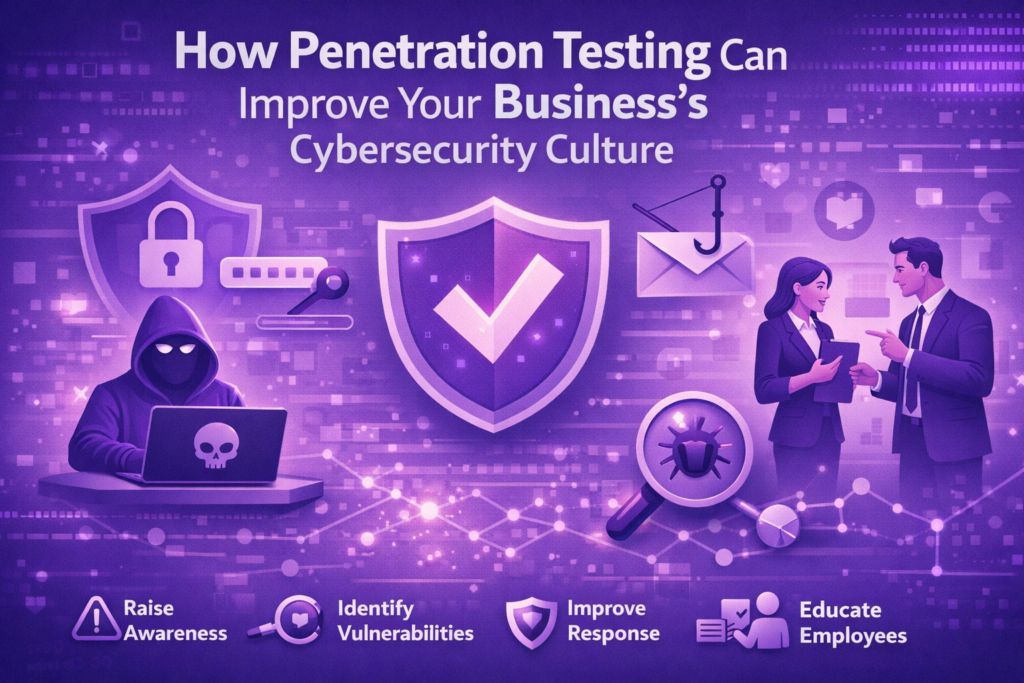
How Penetration Testing Can Improve Your Business’s Cybersecurity Culture

How Penetration Testing Can Improve Your Business’s Cybersecurity Culture In today’s rapidly evolving digital environment, organizations face an increasing number of cyber threats that can compromise sensitive data, disrupt operations, and damage reputations. While advanced security tools and technologies are essential, an often-overlooked factor in cybersecurity success is organizational culture. A strong cybersecurity culture ensures that employees at every level understand the importance of security and actively contribute to protecting company systems and data. One powerful way to build this culture is through penetration testing. What Is Penetration Testing? Penetration testing involves simulating real-world cyberattacks on an organization’s systems, applications, or networks to identify security weaknesses before attackers exploit them. Ethical hackers attempt to breach security controls using the same techniques used by cybercriminals. The findings help businesses understand where vulnerabilities exist and how to fix them before they become serious threats. But penetration testing does more than detect vulnerabilities it also helps organizations build a security-first mindset among employees. How Penetration Testing Strengthens Cybersecurity Culture 1. Raising Cybersecurity Awareness Across the Organization Weak passwords can be cracked quickly Phishing emails can lead to unauthorized access Unsecured devices can expose internal networks 2. Empowering Employees with Practical Security Knowledge Using strong and unique passwords Identifying phishing and social engineering attempts Implementing multi-factor authentication (MFA) Safely handling sensitive business data 3. Encouraging a Proactive Approach to Cybersecurity Outdated software or missing patches Misconfigured systems or open ports Weak authentication processes 4. Improving Incident Response and Team Collaboration Delayed breach detection Inefficient communication during incidents Lack of coordination between departments 5. Promoting Continuous Security Improvement Security requires ongoing monitoring, continuous updates, and employee awareness. Strengthen Your Cybersecurity Culture Partner with Lumiverse Solutions to identify vulnerabilities and build a security-first organization. Contact Us Conclusion Penetration testing is far more than a technical security assessment. It plays a vital role in shaping a strong cybersecurity culture by raising awareness, educating employees, encouraging proactive security practices, improving incident response readiness, and promoting continuous improvement. FAQ What is penetration testing? Penetration testing is a simulated cyberattack conducted by security professionals to identify vulnerabilities. How often should businesses conduct penetration testing? Typically once or twice a year or after major system changes. Why is penetration testing important? It helps identify vulnerabilities and strengthen security defenses. Can it improve employee awareness? Yes, it demonstrates real threats and improves awareness. Recent Posts March 17, 2026 How Penetration Testing Can Improve Your Business’s Cybersecurity Culture March 10, 2026 How Network Security Assessments Saved Businesses from Cyber Attacks March 3, 2026 How Geopolitical Conflicts Increase Cyber Risk for Indian Businesses February 24, 2026 AI Innovation vs Cyber Risk: What Businesses Must Learn from the 2026 AI Summit February 14, 2026 7 Cybersecurity Gaps Regulators Flag During VAPT Audits February 10, 2026 Why Vendor Risk Is the Biggest Compliance Failure in 2026 February 3, 2026 Cybersecurity Compliance in 2026: Why Continuous Audits Have Replaced Annual Checks January 21, 2026 From CSCRF to DPDP: The Growing Link Between Cybersecurity and Data Privacy in 2026 December 12, 2025 SEBI CSCRF Audit: Why You Must Be Ready For 2026 December 6, 2025 Why Every Business Needs a Red Team Assessment | Strengthening Cybersecurity Categories Cyber Security Security Operations Center Cloud Security Case Study Technology Trends Don’t Let Cyber Risks Disrupt Your Business Growth Certified Cybersecurity & Compliance Experts: 12+ years of industry experience delivering VAPT, ISO 27001, SOC 2, and regulatory compliance aligned with global standards. Proven Real-World Cyber Expertise: 850+ cybercrime cases investigated and 1500+ cybersecurity audits conducted across enterprises and regulated industries. Strengthening People, Processes & Technology: 4500+ cybersecurity awareness sessions delivered to reduce human-layer risks and improve organizational cybersecurity. End-to-End Security Partner: From advanced penetration testing to global compliance frameworks, Lumiverse Solutions ensuring businesses stay secure, compliant, and confidently future-ready. Secure. Comply. Scale with Confidence. Book Your free Consultation → India: +91 77986 60940 / +91 7397 882 579 UAE: +971 58 585 6233

How Penetration Testing Can Improve Your Business’s Cybersecurity Culture Read More »

How Network Security Assessments Saved Businesses from Cyber Attacks

How Network Security Assessments Saved Businesses from Cyber Attacks In today’s highly interconnected digital environment, cyber threats are becoming more sophisticated and frequent. Businesses of all sizes face the risk of data breaches, ransomware attacks, financial fraud, and intellectual property theft. A single vulnerability in a network can expose sensitive information, disrupt operations, and cause serious reputational damage. One of the most effective ways organizations can protect themselves is through regular network security assessments. These assessments help identify weaknesses before attackers can exploit them. Below are real-life scenarios that demonstrate how proactive network security assessments helped businesses detect vulnerabilities early and prevent potentially devastating cyber incidents. Case Study 1: Preventing a Data Breach in a Healthcare Company Healthcare organizations manage highly sensitive patient data, making them a prime target for cybercriminals. The Threat A healthcare provider conducted a routine network security assessment and discovered that its firewall configuration was outdated. This flaw exposed the network to ransomware attacks. Cybercriminals were already exploiting similar firewall vulnerabilities across the healthcare sector, encrypting critical patient records and demanding large ransom payments. The Solution Updated firewall configurations Applied security patches to vulnerable systems Implemented strict access control policies Conducted employee training on phishing awareness The Result Data breaches avoided Regulatory fines prevented Operational disruption eliminated Most importantly, they maintained the trust of their patients. Case Study 2: Stopping Financial Fraud in a Retail Chain Retail companies process large volumes of financial transactions, making them attractive targets for cybercriminals. The Threat A retail chain operating multiple outlets noticed suspicious activity within its financial systems. A network security assessment was conducted to investigate the issue. The assessment revealed malware installed on a point-of-sale (POS) system designed to capture customer credit card information during transactions. The Solution Replaced compromised POS terminals Strengthened encryption for payment data Implemented real-time security monitoring Introduced stricter system access controls The Result The rapid response prevented further theft of customer data and stopped the malware from spreading across other systems. The company avoided millions of dollars in potential financial losses and maintained customer confidence. Case Study 3: Protecting Intellectual Property in a Technology Firm The Threat A technology startup performing innovative research conducted a proactive network security assessment. During the assessment, security experts discovered a misconfigured cloud storage system that allowed unauthorized access. The Solution Corrected the cloud storage configuration Implemented multi-factor authentication (MFA) Encrypted sensitive research files Monitored access logs and suspicious activity The Result Unauthorized access attempts were detected and blocked, protecting the company’s intellectual property and competitive advantage. Why Proactive Network Security Assessments Are Essential Identify Vulnerabilities Early Minimize Financial Losses Maintain Regulatory Compliance Build Trust with Customers and Stakeholders Lumiverse Solutions: Your Trusted Cybersecurity Partner At Lumiverse Solutions, we specialize in delivering comprehensive network security assessments tailored to your organization’s unique needs. Identify vulnerabilities in your network infrastructure Simulate real-world cyber attacks Provide actionable remediation recommendations Strengthen your organization’s overall security posture Secure Your Business Today Don’t wait for a breach to happen. Contact Lumiverse Solutions to secure your network and safeguard your business. Book a free consultation – 30 min Frequently Asked Questions What is a network security assessment? A network security assessment is a process used to evaluate a company’s network infrastructure to identify vulnerabilities, security gaps, and potential cyber threats. How often should businesses conduct network security assessments? Organizations should conduct security assessments regularly, typically annually or whenever significant infrastructure changes occur. Why are network security assessments important? They help prevent cyber attacks, protect sensitive data, ensure regulatory compliance, and strengthen overall cybersecurity posture. What industries need network security assessments the most? Industries handling sensitive data such as healthcare, finance, retail, and technology benefit significantly from regular security assessments. Recent Posts March 10, 2026 How Network Security Assessments Saved Businesses from Cyber Attacks March 3, 2026 How Geopolitical Conflicts Increase Cyber Risk for Indian Businesses February 24, 2026 AI Innovation vs Cyber Risk: What Businesses Must Learn from the 2026 AI Summit February 14, 2026 7 Cybersecurity Gaps Regulators Flag During VAPT Audits February 10, 2026 Why Vendor Risk Is the Biggest Compliance Failure in 2026 February 3, 2026 Cybersecurity Compliance in 2026: Why Continuous Audits Have Replaced Annual Checks January 21, 2026 From CSCRF to DPDP: The Growing Link Between Cybersecurity and Data Privacy in 2026 December 12, 2025 SEBI CSCRF Audit: Why You Must Be Ready For 2026 December 6, 2025 Why Every Business Needs a Red Team Assessment | Strengthening Cybersecurity November 27, 2025 What Is IRDAI ISNP Audit? A Simple Guide for Insurers Categories Cyber Security Security Operations Center Cloud Security Case Study Technology Trends Don’t Let Cyber Risks Disrupt Your Business Growth Certified Cybersecurity & Compliance Experts: 12+ years of industry experience delivering VAPT, ISO 27001, SOC 2, and regulatory compliance aligned with global standards. Proven Real-World Cyber Expertise: 850+ cybercrime cases investigated and 1500+ cybersecurity audits conducted across enterprises and regulated industries. Strengthening People, Processes & Technology: 4500+ cybersecurity awareness sessions delivered to reduce human-layer risks and improve organizational cybersecurity. End-to-End Security Partner: From advanced penetration testing to global compliance frameworks, Lumiverse Solutions ensuring businesses stay secure, compliant, and confidently future-ready. Secure. Comply. Scale with Confidence. Book Your free Consultation → India: +91 77986 60940 / +91 7397 882 579 UAE: +971 58 585 6233

How Network Security Assessments Saved Businesses from Cyber Attacks Read More »

How Geopolitical Conflicts Increase Cyber Risk for Indian Businesses

How Geopolitical Conflicts Increase Cyber Risk for Indian Businesses In 2026, cyber risk is no longer driven only by criminal motives. Geopolitical conflicts are reshaping the cybersecurity landscape and Indian businesses are increasingly caught in the crossfire. Global tensions, trade disputes, regional conflicts, and digital warfare tactics are fueling a rise in state-sponsored cyber activity, supply chain disruptions, and targeted cyberattacks. For Indian organizations operating in finance, technology, manufacturing, telecom, and critical infrastructure, understanding this evolving risk is essential. Why Geopolitical Conflicts Translate into Cyber Threats Modern conflicts extend beyond physical borders. Nations now deploy cyber operations to: Disrupt critical infrastructure Steal intellectual property Conduct spying Influence markets Target financial systems Undermine economic stability When tensions escalate globally, cyberattacks often increase in volume and sophistication. Indian businesses with global exposure, foreign partnerships, or cross-border data flows become indirect targets. 1. Rise of State-Sponsored Attacks Geopolitical conflicts often trigger state-backed cyber campaigns. These attacks may target: Banking institutions Energy providers Telecom networks Defense contractors Government-linked enterprises Even private businesses can be targeted if they are part of strategic supply chains. State-sponsored attacks are typically: Highly coordinated Persistent Well-funded Advanced in technique Traditional defenses may not be sufficient. 2. Supply Chain Vulnerabilities Indian businesses increasingly rely on: Global cloud providers International SaaS vendors Offshore development teams Hardware imported from abroad Geopolitical instability can: Compromise vendor security Increase third-party breaches Disrupt critical updates or patches Introduce malware into supply chains Vendor risk governance becomes crucial during global conflicts. 3. Ransomware as a Political Tool In recent years, ransomware attacks have been linked to geopolitical motivations. Attackers may: Target organizations in specific regions Disrupt operations during sensitive periods Leak politically sensitive data Ransomware campaigns may spike during international crises, elections, or sanctions. Indian companies operating globally must anticipate such patterns. 4. Increased Phishing & Disinformation Campaigns Geopolitical conflicts fuel misinformation and social engineering. Attackers exploit: Breaking news events Military tensions Trade sanctions Political announcements Phishing emails disguised as urgent geopolitical updates often bypass employee suspicion. Deepfake technologies further amplify this threat. 5. Regulatory & Compliance Pressure During geopolitical instability, regulators may tighten: Incident reporting timelines Cyber resilience requirements Cross-border data transfer rules Vendor security standards Indian regulators expect businesses to maintain operational resilience regardless of global tensions. Compliance lapses during crises are not excused. 6. Financial Market Targeting Financial institutions and fintech companies face elevated risk during global tensions. Cyberattacks may aim to: Manipulate trading systems Access financial records Cause market disruption Undermine investor confidence Indian BFSI organizations must maintain continuous monitoring and incident readiness. 7. Critical Infrastructure & Strategic Sectors at Risk Energy, telecom, manufacturing, logistics, and healthcare sectors are especially vulnerable during geopolitical conflicts. Disruptions in these sectors can: Affect supply chains Impact national stability Create cascading economic effects Businesses in these sectors must elevate their cybersecurity posture. Why Indian Businesses Cannot Ignore This Risk India’s growing digital economy, expanding global partnerships, and strategic position in international trade make it increasingly visible in the global cyber landscape. Even organizations with no political involvement may face: Collateral cyber damage Indirect vendor compromise Data exfiltration attempts Targeted phishing waves Cyber risk is now influenced by global events beyond corporate control. Preparedness must be continuous. How Businesses Can Strengthen Cyber Security Implement continuous monitoring and SOC capabilities Conduct frequent VAPT and Red Team assessments Strengthen vendor risk management Train employees against social engineering Maintain updated incident response plans Monitor dark web and threat intelligence feeds Align with regulatory cybersecurity frameworks Cyber resilience must be proactive, not reactive. How Lumiverse Solutions Supports Businesses During Heightened Cyber Risk Advanced VAPT & Red Team simulations Continuous SOC monitoring Vendor risk governance frameworks Compliance readiness (SEBI, RBI, DPDP) Dark Web monitoring & threat intelligence Incident response planning & tabletop exercises We help businesses remain resilient even when global uncertainty rises. Conclusion Geopolitical conflicts are no longer distant events; they directly influence cyber risk for Indian businesses. In 2026, cybersecurity strategy must account for global instability, state-sponsored threats, and supply chain exposure. Organizations that adopt proactive, continuous security measures will be better positioned to withstand disruption. Strengthen Your Cyber Resilience Today Assess your geopolitical cyber exposure and build defenses against emerging global threats. Connect with Lumiverse Solutions Recent Posts March 3, 2026 How Geopolitical Conflicts Increase Cyber Risk for Indian Businesses February 24, 2026 AI Innovation vs Cyber Risk: What Businesses Must Learn from the 2026 AI Summit February 14, 2026 7 Cybersecurity Gaps Regulators Flag During VAPT Audits February 10, 2026 Why Vendor Risk Is the Biggest Compliance Failure in 2026 February 3, 2026 Cybersecurity Compliance in 2026: Why Continuous Audits Have Replaced Annual Checks January 21, 2026 From CSCRF to DPDP: The Growing Link Between Cybersecurity and Data Privacy in 2026 December 12, 2025 SEBI CSCRF Audit: Why You Must Be Ready For 2026 Categories Cyber Security Security Operations Center Cloud Security Case Study Technology Trends Don’t Let Cyber Risks Disrupt Your Business Growth Certified Cybersecurity & Compliance Experts: 12+ years of industry experience delivering VAPT, ISO 27001, SOC 2, and regulatory compliance aligned with global standards. Proven Real-World Cyber Expertise: 850+ cybercrime cases investigated and 1500+ cybersecurity audits conducted across enterprises and regulated industries. Strengthening People, Processes & Technology: 4500+ cybersecurity awareness sessions delivered to reduce human-layer risks and improve organizational cybersecurity. End-to-End Security Partner: From advanced penetration testing to global compliance frameworks, Lumiverse Solutions ensuring businesses stay secure, compliant, and confidently future-ready. Secure. Comply. Scale with Confidence. Book Your free Consultation → India: +91 77986 60940 / +91 7397 882 579 UAE: +971 58 585 6233 Tell Us Your Opinion We value your perspective! Share your thoughts, feedback, or questions below. Your opinion matters and helps create a richer, more engaging conversation. Let’s connect and hear what you think about this post!

How Geopolitical Conflicts Increase Cyber Risk for Indian Businesses Read More »

AI Innovation vs Cyber Risk: What Businesses Must Learn from the 2026 AI Summit

AI Innovation vs Cyber Risk: What Businesses Must Learn from the 2026 AI Summit The 2026 AI Summit brought together industry leaders, cybersecurity experts, and AI innovators to address one of the most pressing challenges of our time: how to balance AI-driven innovation with emerging cyber risks. AI is reshaping business operations, workflows, and threat landscapes across industries. But with this transformation comes a new category of cyber risks that demand proactive defenses and strategic governance. 1. AI Is Accelerating Innovation Faster Than Regulations A major theme at the summit was the speed of AI adoption: AI tools are enabling automation, predictive analytics, threat detection, process optimization, and customer personalization. But regulatory frameworks such as data privacy, AI ethics, and cybersecurity requirements are struggling to keep pace. Businesses must understand that innovation without guardrails can create vulnerabilities, especially when AI systems interact with sensitive data or automate critical decisions. Action for businesses: Establish clear governance policies for AI initiatives to ensure compliance and safety from the outset. 2. AI Is Both a Cyber Defense Tool and a Cyber Threat Multiplier Summit experts emphasized a dual reality: AI strengthens cyber defense by: Detecting anomalies faster than traditional tools Reducing response times Predicting attack patterns Automating threat hunting But AI also empowers attackers to: Create adaptive malware Automate phishing attacks at scale Generate deepfakes for social engineering Bypass legacy detection systems The takeaway? AI alone is not enough: Human + AI collaboration is the most effective defense. 3. AI Systems Must Be Designed with Security by Default Security cannot be an afterthought. The summit stressed: Integrating security into AI development lifecycles Performing continuous testing of models (e.g., adversarial testing) Monitoring model inputs and outputs for anomalies Ensuring AI models are resilient against data poisoning and manipulation AI that learns from unsafe or manipulated data can behave unpredictably, creating new risk channels. Action for businesses: Pair AI development with cybersecurity teams from day one. 4. Explainability and Transparency Are Now Strategic Priorities Black-box AI models make decisions that are hard to interpret. Regulators and clients alike demand explainable AI. Lack of transparency increases compliance risk Complex AI decisions without audit trails raise governance concerns 2026 strategy must include explainability standards, especially for systems impacting finance, healthcare, or personal data. 5. AI Governance Frameworks Are Critical Clear policies on data usage and model training Defined roles and responsibilities Risk assessment procedures Incident escalation paths for AI systems Documentation and auditability 6. The Human Factor Still Matters Most Most breaches still occur due to human error Employee social engineering remains a top attack vector Cultural training and awareness are essential Action for businesses: Invest in continuous cyber awareness training tailored to AI-related risks. 7. Collaboration Across Sectors Is No Longer Optional Businesses Governments Cybersecurity industry AI developers Academia Cyber Risk Lessons Every Business Must Apply Now Lesson 1: AI risk is systemic, not technical Lesson 2: Reactive cybersecurity is outdated Lesson 3: Governance and ethics must align How Lumiverse Solutions Helps Balance AI Innovation and Cyber Risk We help you innovate securely, not just quickly. Connect With Lumiverse Solutions Conclusion The 2026 AI Summit underscored a clear reality: AI innovation and cyber risk are two sides of the same coin. FAQ Section Q1. What was the key takeaway from the 2026 AI Summit regarding cybersecurity? ▾ The main takeaway was that AI innovation must be paired with strong cybersecurity governance. Businesses must balance rapid AI adoption with proactive risk management. Q2. How does AI increase cyber risk for businesses? ▾ AI can introduce risks such as automated attacks, deepfake fraud, data poisoning, and model manipulation if systems are not properly secured and monitored. Q3. Can AI improve cybersecurity defenses? ▾ Yes. AI enhances cybersecurity by enabling predictive threat detection, faster incident response, anomaly detection, and automated monitoring. Recent Posts February 24, 2026 AI Innovation vs Cyber Risk: What Businesses Must Learn from the 2026 AI Summit February 14, 2026 7 Cybersecurity Gaps Regulators Flag During VAPT Audits February 10, 2026 Why Vendor Risk Is the Biggest Compliance Failure in 2026 February 3, 2026 Cybersecurity Compliance in 2026: Why Continuous Audits Have Replaced Annual Checks January 21, 2026 From CSCRF to DPDP: The Growing Link Between Cybersecurity and Data Privacy in 2026 December 12, 2025 SEBI CSCRF Audit: Why You Must Be Ready For 2026 December 6, 2025 Why Every Business Needs a Red Team Assessment | Strengthening Cybersecurity November 27, 2025 What Is IRDAI ISNP Audit? A Simple Guide for Insurers November 18, 2025 Understanding DPDP 2025 Rules: Key Changes, Compliance Requirements, and Next Steps November 1, 2025 Top 10 VAPT Best Practices for 2025: What Organisations Should Be Doing Now Categories Cyber Security Security Operations Center Cloud Security Case Study Technology Trends Don’t Let Cyber Risks Disrupt Your Business Growth Certified Cybersecurity & Compliance Experts: 12+ years of industry experience delivering VAPT, ISO 27001, SOC 2, and regulatory compliance aligned with global standards. Proven Real-World Cyber Expertise: 850+ cybercrime cases investigated and 1500+ cybersecurity audits conducted across enterprises and regulated industries. Strengthening People, Processes & Technology: 4500+ cybersecurity awareness sessions delivered to reduce human-layer risks and improve organizational cybersecurity. End-to-End Security Partner: From advanced penetration testing to global compliance frameworks, Lumiverse Solutions ensuring businesses stay secure, compliant, and confidently future-ready. Secure. Comply. Scale with Confidence. Book Your free Consultation → India: +91 77986 60940 / +91 7397 882 579 UAE: +971 58 585 6233 Tell Us Your Opinion We value your perspective! Share your thoughts, feedback, or questions below. Your opinion matters and helps create a richer, more engaging conversation. Let’s connect and hear what you think about this post!

AI Innovation vs Cyber Risk: What Businesses Must Learn from the 2026 AI Summit Read More »

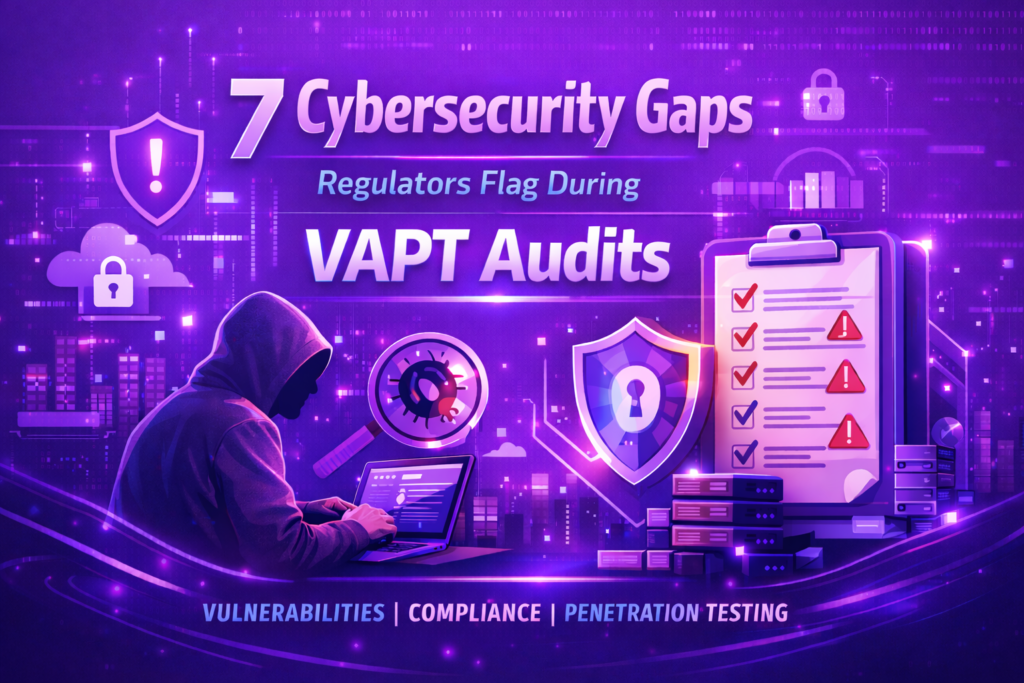
7 Cybersecurity Gaps Regulators Flag During VAPT Audits

7 Cybersecurity Gaps Regulators Flag During VAPT Audits Vulnerability Assessment and Penetration Testing (VAPT) has become a core regulatory requirement across industries in 2026. Regulators no longer view VAPT as a one-time technical exercise; they use it as a measure of an organization’s security maturity, governance, and remediation discipline. Despite regular testing, many organizations continue to receive adverse observations during regulatory and internal audits. The issue is rarely the absence of a VAPT report; it is the gaps revealed around how vulnerabilities are handled. This blog explains the seven most common cybersecurity gaps regulators flag during VAPT audits and why fixing them is critical for compliance and resilience. 1. Critical Vulnerabilities Left Unpatched The most frequent and serious gap is the presence of open critical or high-risk vulnerabilities. Known vulnerabilities left unresolved for months No defined patching timelines Lack of ownership for remediation In 2026, regulators expect time-bound closure, not just identification. Leaving critical issues open is treated as a governance failure, not a technical oversight. 2. VAPT Reports Without Remediation Evidence Many organizations submit VAPT reports but fail to provide proof of remediation. No screenshots or logs showing fixes No re-testing evidence No sign-off from system owners Regulators assess the full remediation lifecycle, not just the test results. Without closure evidence, vulnerabilities are considered unresolved. 3. Limited Scope of VAPT Testing Another major gap is incomplete VAPT coverage. Cloud environments are excluded APIs are not tested External-facing applications are missed Internal lateral movement is not assessed In 2026, regulators expect VAPT to cover all critical assets, including cloud, SaaS, APIs, and third-party integrations. 4. Repeat Findings Across Multiple VAPT Cycles Repeated vulnerabilities across consecutive VAPT audits signal deeper problems. This indicates: Weak root-cause analysis Temporary fixes instead of permanent remediation Poor secure development practices Regulators view repeat findings as a sign of ineffective security governance, even if testing is performed regularly. 5. Absence of Risk-Based Prioritization Not all vulnerabilities carry the same risk, yet many organizations treat them equally or ignore prioritization altogether. No risk scoring aligned with business impact Delayed remediation of exploitable vulnerabilities No linkage between vulnerabilities and critical systems In 2026, regulators expect a risk-based remediation approach, focusing first on vulnerabilities that impact sensitive data and core operations. 6. VAPT Performed as a Compliance Checkbox Regulators increasingly flag organizations that treat VAPT as a “tick-box” requirement. Same test methodology every year No contextual analysis of threats No alignment with incident trends or attack scenarios VAPT is expected to evolve with the threat landscape. Static testing models no longer meet regulatory expectations. 7. Weak Integration Between VAPT and Incident Response One of the most overlooked gaps is the lack of integration between VAPT findings and incident response planning. Vulnerabilities not mapped to attack scenarios Incident response plans not updated based on VAPT outcomes No tabletop exercises linked to identified risks In 2026, regulators expect organizations to use VAPT results to improve real-world attack readiness, not just security scores. Why These VAPT Gaps Matter More in 2026 Regulators now use VAPT audits to assess security accountability, response readiness, risk management maturity, and ongoing compliance discipline. Unresolved VAPT gaps increase the likelihood of regulatory observations, repeat audits, penalties, and operational disruptions. VAPT outcomes directly influence compliance confidence. Conclusion In 2026, regulators are not asking whether VAPT was conducted, they are asking how effectively vulnerabilities were managed. Addressing these seven common gaps can significantly reduce audit findings and strengthen cyber resilience. Strengthen Your VAPT Readiness in 2026 Connect with Lumiverse Solutions to strengthen your VAPT program, close audit gaps, and stay compliant throughout 2026. Connect With Lumiverse Frequently Asked Questions Q1. What is a VAPT audit? A VAPT audit evaluates an organization’s systems to identify security vulnerabilities and test how effectively they can be exploited by attackers. Q2. Why do regulators focus heavily on VAPT audits? Regulators use VAPT audits to assess real-world security readiness, remediation discipline, and an organization’s ability to prevent cyber incidents. Q3. What is the most common issue found during VAPT audits? The most common issue is critical vulnerabilities remaining unpatched despite being identified in previous assessments. Q4. Is performing VAPT enough for compliance in 2026? No. Regulators expect complete remediation, re-testing, and documented evidence, not just a VAPT report. Q5. How often should VAPT be conducted? Most organizations conduct VAPT annually, but regulators in 2026 expect more frequent testing, especially after major system or infrastructure changes. Q6. Do regulators check VAPT remediation evidence? Yes. Auditors review screenshots, logs, patch records, and re-test reports to confirm vulnerabilities are fully resolved. Q7. Why are repeat VAPT findings a red flag? Repeat findings indicate weak governance, ineffective root-cause analysis, and poor security control implementation. Q8. Does VAPT need to include cloud and APIs? Yes. In 2026, regulators expect VAPT to cover cloud environments, APIs, web applications, and external-facing systems. Q9. How does VAPT relate to incident response readiness? VAPT findings should be used to strengthen incident response plans and simulate realistic attack scenarios during drills. Q10. How can Lumiverse Solutions help with VAPT compliance? Lumiverse provides comprehensive VAPT, remediation tracking, re-testing, audit-ready documentation, and alignment with regulatory expectations. Recent Posts February 14, 2026 7 Cybersecurity Gaps Regulators Flag During VAPT Audits February 10, 2026 Why Vendor Risk Is the Biggest Compliance Failure in 2026 February 3, 2026 Cybersecurity Compliance in 2026: Why Continuous Audits Have Replaced Annual Checks January 21, 2026 From CSCRF to DPDP: The Growing Link Between Cybersecurity and Data Privacy in 2026 December 12, 2025 SEBI CSCRF Audit: Why You Must Be Ready For 2026 December 6, 2025 Why Every Business Needs a Red Team Assessment | Strengthening Cybersecurity November 27, 2025 What Is IRDAI ISNP Audit? A Simple Guide for Insurers November 18, 2025 Understanding DPDP 2025 Rules: Key Changes, Compliance Requirements, and Next Steps November 1, 2025 Top 10 VAPT Best Practices for 2025: What Organisations Should Be Doing Now October 29, 2025 How to Get STQC GIGW 3.0 Certification | Complete Audit & Compliance Process Explained Categories Cyber Security Security Operations

7 Cybersecurity Gaps Regulators Flag During VAPT Audits Read More »

Why Vendor Risk Is the Biggest Compliance Failure in 2026

Why Vendor Risk Is the Biggest Compliance Failure in 2026 In 2026, most compliance failures are no longer caused by internal system weaknesses alone. Instead, regulators across sectors are consistently identifying vendor and third-party risk as the single biggest reason organizations fail cybersecurity and data protection audits. From cloud service providers and SaaS platforms to IT support vendors and outsourced operations, businesses today depend heavily on third parties. While this improves efficiency, it also expands the attack surface often beyond direct control. This blog explains why vendor risk has become the top compliance failure in 2026, what regulators are actually checking, and how organizations must strengthen third-party governance. Why Vendor Risk Has Escalated in 2026 Modern organizations rarely operate in isolation. Core systems, data processing, monitoring, customer support, and analytics are frequently outsourced or cloud-based. Regulators have observed that: Many cyber incidents originate at vendors Breaches often involve shared credentials or unmanaged access Vendor security assessments are outdated or missing Organizations lack visibility into vendor environments As a result, regulators now treat vendor failures as organizational failures. What Regulators Expect for Vendor Risk in 2026 Across cybersecurity and data protection frameworks, vendor risk expectations have tightened significantly. Regulators now expect organizations to demonstrate: Clear identification of all third-party vendors Risk classification based on data access and system criticality Documented vendor security assessments Ongoing monitoring of vendor activities Defined accountability for vendor incidents Vendor governance is no longer a paperwork exercise; it must be operational and continuous. Common Vendor Risk Gaps Found During Compliance Audits Based on 2026 audit trends, the most frequent vendor-related gaps include: 1. No Formal Vendor Risk Classification Many organizations treat all vendors the same. Regulators expect vendors to be categorized as high, medium, or low risk based on access to systems and data. 2. One-Time or Outdated Vendor Assessments Vendor security checks are often performed only during onboarding. In 2026, auditors expect periodic reassessments, especially after system changes or incidents. 3. Unmonitored Vendor Access Common findings include: Shared credentials No MFA for vendor access Persistent access even after contract expiry Uncontrolled access is a major audit red flag. 4. Weak Contractual Cybersecurity Clauses Many contracts lack: Security control requirements Incident reporting timelines Audit rights Data handling obligations Contracts are now reviewed closely during audits. 5. No Vendor Incident Response Integration When incidents occur at vendors, organizations often lack: Clear escalation paths Incident notification timelines Joint response procedures This delays regulatory reporting and worsens impact. 6. Limited Visibility into Cloud and SaaS Vendors Organizations struggle to demonstrate: Where data is stored Who can access it How security is monitored This gap is especially critical for privacy compliance. Why Vendor Risk Directly Impacts Compliance Outcomes Vendor-related failures affect multiple compliance areas simultaneously: Cybersecurity resilience Incident reporting obligations Data protection requirements Audit evidence completeness Regulatory trust In 2026, even strong internal controls cannot compensate for weak vendor governance. What Businesses Must Do to Fix Vendor Risk in 2026 To remain compliant, organizations must move to continuous vendor risk management. Key actions include: Maintain an updated vendor inventory Classify vendors based on risk Perform periodic security assessments Enforce MFA and least-privilege access Monitor vendor activity through logs Update contracts with cybersecurity obligations Integrate vendors into incident response plans Maintain audit-ready evidence Vendor risk management must be treated as a core compliance function, not a procurement task. How Lumiverse Solutions Helps Manage Vendor Risk Lumiverse supports organizations with: Vendor risk gap assessments Third-party security evaluation frameworks Continuous monitoring and access governance VAPT for vendor-exposed systems Contractual cybersecurity requirement guidance Incident response integration for vendors Audit-ready documentation and reporting Lumiverse Solutions Pvt Ltd helps organizations reduce vendor-driven compliance failures and stay inspection-ready throughout the year. Conclusion In 2026, vendor risk is no longer a hidden issue; it is a leading cause of compliance failure. Regulators expect organizations to take full accountability for the security and data protection practices of their third parties. Organizations that proactively manage vendor risk will face fewer audit observations, faster incident response, and stronger regulatory confidence. Connect with Lumiverse Solutions to strengthen your vendor risk governance and avoid compliance failures in 2026. Recent Posts February 10, 2026 Why Vendor Risk Is the Biggest Compliance Failure in 2026 February 3, 2026 Cybersecurity Compliance in 2026: Why Continuous Audits Have Replaced Annual Checks January 21, 2026 From CSCRF to DPDP: The Growing Link Between Cybersecurity and Data Privacy in 2026 December 12, 2025 SEBI CSCRF Audit: Why You Must Be Ready For 2026 December 6, 2025 Why Every Business Needs a Red Team Assessment | Strengthening Cybersecurity November 27, 2025 What Is IRDAI ISNP Audit? A Simple Guide for Insurers November 18, 2025 Understanding DPDP 2025 Rules: Key Changes, Compliance Requirements, and Next Steps November 1, 2025 Top 10 VAPT Best Practices for 2025: What Organisations Should Be Doing Now October 29, 2025 How to Get STQC GIGW 3.0 Certification | Complete Audit & Compliance Process Explained October 22, 2025 RBI’s Compliance Crackdown: What Co-op Banks Can Learn from Recent Penalties Categories Cyber Security Security Operations Center Cloud Security Case Study Technology Trends Don’t Let Cyber Risks Disrupt Your Business Growth Certified Cybersecurity & Compliance Experts: 12+ years of industry experience delivering VAPT, ISO 27001, SOC 2, and regulatory compliance aligned with global standards. Proven Real-World Cyber Expertise: 850+ cybercrime cases investigated and 1500+ cybersecurity audits conducted across enterprises and regulated industries. Strengthening People, Processes & Technology: 4500+ cybersecurity awareness sessions delivered to reduce human-layer risks and improve organizational cybersecurity. End-to-End Security Partner: From advanced penetration testing to global compliance frameworks, Lumiverse Solutions ensuring businesses stay secure, compliant, and confidently future-ready. Secure. Comply. Scale with Confidence. Book Your free Consultation → India: +91 77986 60940 / +91 7397 882 579 UAE: +971 58 585 6233 Tell Us Your Opinion We value your perspective! Share your thoughts, feedback, or questions below. Your opinion matters and helps create a richer, more engaging conversation. Let’s connect and hear what you think about this post!

Why Vendor Risk Is the Biggest Compliance Failure in 2026 Read More »

Continuous Audits

Cybersecurity Compliance in 2026: Why Continuous Audits Have Replaced Annual Checks

Cybersecurity Compliance in 2026: Why Continuous Audits Have Replaced Annual Checks Cybersecurity compliance has fundamentally changed in 2026. For most businesses, especially those operating in regulated sectors, annual audits are no longer enough. Regulators now expect continuous compliance, real-time visibility, and ongoing proof that security controls are actually working. Organizations that still treat cybersecurity audits as a once-a-year activity are increasingly exposed to regulatory action, audit observations, and operational risk. Why Annual Cybersecurity Audits Are No Longer Sufficient Traditional audits were designed for a slower digital environment. Today’s threat landscape moves far faster. Annual audits fail because: Threats evolve every day, not once a year New vulnerabilities emerge continuously Cloud, SaaS, and third-party dependencies change frequently Attackers exploit gaps between audit cycles Regulators have recognized this reality. As a result, compliance frameworks now focus on ongoing assurance, not point-in-time validation. What Regulators Expect from Cybersecurity Compliance in 2026 Across financial services, insurance, capital markets, and data-driven industries, regulators are aligned on one principle: cybersecurity must be continuously demonstrable. In 2026, regulators expect: Continuous monitoring of critical systems Real-time detection and alerting Regular vulnerability assessments with documented remediation Ongoing access reviews and privilege controls Evidence of active incident response readiness Continuous vendor and third-party risk oversight Compliance is no longer about policies alone, it is about operational proof. How Continuous Cybersecurity Audits Work in Practice Continuous audits do not mean constant disruption. Instead, they rely on automation, monitoring, and structured governance. Key components include: 1. Continuous Monitoring and Logging Organizations must maintain centralized logs, track user behaviour, and detect anomalies in real time. This allows immediate response rather than delayed discovery. 2. Ongoing Vulnerability Management Instead of annual VAPT, businesses now perform: Regular vulnerability scans Periodic penetration testing Continuous tracking of remediation status Auditors focus heavily on how quickly risks are identified and resolved. 3. Real-Time Incident Readiness Incident response plans are updated Teams are trained and ready Simulated drills are conducted Escalation paths are clearly defined Preparedness matters more than documentation. 4. Continuous Vendor Risk Assessment Vendor classification by risk Ongoing security reviews Access monitoring Contractual cybersecurity obligations A vendor’s failure is treated as your failure. Why Continuous Compliance Reduces Regulatory Risk Fewer audit observations Faster remediation of gaps Stronger cyber resilience Better visibility for leadership Reduced regulatory stress Most importantly, continuous compliance ensures there are no surprises during inspections. What Businesses Must Do to Adapt in 2026 Move from annual audits to ongoing assessments Implement continuous monitoring and SOC capabilities Automate evidence collection and reporting Integrate cybersecurity into daily operations Align cyber controls with data protection requirements Establish continuous vendor governance Compliance in 2026 is not a project, it is a process. How Lumiverse Solutions Supports Continuous Cybersecurity Compliance Cybersecurity gap assessments Continuous monitoring and SOC services VAPT and remediation tracking Incident response readiness and drills Vendor risk governance frameworks Compliance evidence management Our approach ensures you remain audit-ready throughout the year, not just during inspection periods. Conclusion Cybersecurity compliance in 2026 demands a shift in mindset. Annual audits are no longer enough to protect businesses from regulatory action or cyber threats. Continuous audits provide the visibility, resilience, and assurance regulators now expect. Build Continuous Cybersecurity Compliance in 2026 👉 Connect with Lumiverse Solutions to build a continuous cybersecurity compliance framework that keeps your organization secure, compliant, and confident throughout 2026. Book your free consultation FAQ: Cybersecurity Compliance in 2026 Q1. What is cybersecurity compliance in 2026? Cybersecurity compliance in 2026 means continuously demonstrating that security controls, monitoring, and governance are working, rather than proving compliance once a year through an annual audit. Q2. Why are annual cybersecurity audits no longer enough? Annual audits provide only a point-in-time view. In 2026, threats, systems, and vendors change too frequently, making continuous monitoring and regular assessments essential for compliance. Q3. What is meant by continuous cybersecurity audits? Continuous audits involve ongoing monitoring, frequent vulnerability assessments, real-time logging, incident readiness checks, and regular review of access and vendor risks throughout the year. Q4. Which organizations need continuous cybersecurity compliance? Any organization handling sensitive data or operating under regulatory oversight—such as BFSI, insurance, fintech, capital markets, and large enterprises—needs continuous compliance in 2026. Q5. What do regulators check during continuous compliance reviews? Regulators look for live evidence such as security logs, vulnerability remediation records, incident response readiness, vendor risk assessments, access reviews, and monitoring reports. Q6. How does continuous compliance reduce regulatory risk? Continuous compliance helps identify and fix gaps early, reduces audit observations, prevents last-minute remediation, and ensures organizations are always inspection-ready. Q7. Is continuous compliance more expensive than annual audits? While it may require upfront investment, continuous compliance often reduces long-term costs by preventing breaches, avoiding penalties, and minimizing repeated audit failures. Q8. How does continuous cybersecurity compliance support data protection laws? Continuous monitoring and governance help organizations meet data protection requirements by ensuring secure handling, timely breach detection, and proper access control for personal data. Q9. What role does SOC play in continuous compliance? A Security Operations Center (SOC) enables real-time monitoring, threat detection, alerting, and incident response making it a core requirement for continuous compliance in 2026. Q10. How can Lumiverse Solutions help with continuous cybersecurity compliance? Lumiverse provides gap assessments, SOC and monitoring services, VAPT, remediation tracking, vendor risk governance, and compliance support to help businesses stay audit-ready year-round. Recent Posts February 14, 2026 7 Cybersecurity Gaps Regulators Flag During VAPT Audits February 10, 2026 Why Vendor Risk Is the Biggest Compliance Failure in 2026 February 3, 2026 Cybersecurity Compliance in 2026: Why Continuous Audits Have Replaced Annual Checks January 21, 2026 From CSCRF to DPDP: The Growing Link Between Cybersecurity and Data Privacy in 2026 December 12, 2025 SEBI CSCRF Audit: Why You Must Be Ready For 2026 December 6, 2025 Why Every Business Needs a Red Team Assessment | Strengthening Cybersecurity November 27, 2025 What Is IRDAI ISNP Audit? A Simple Guide for Insurers November 18, 2025 Understanding DPDP 2025 Rules: Key Changes, Compliance Requirements, and Next Steps November 1, 2025 Top 10 VAPT Best

Cybersecurity Compliance in 2026: Why Continuous Audits Have Replaced Annual Checks Read More »